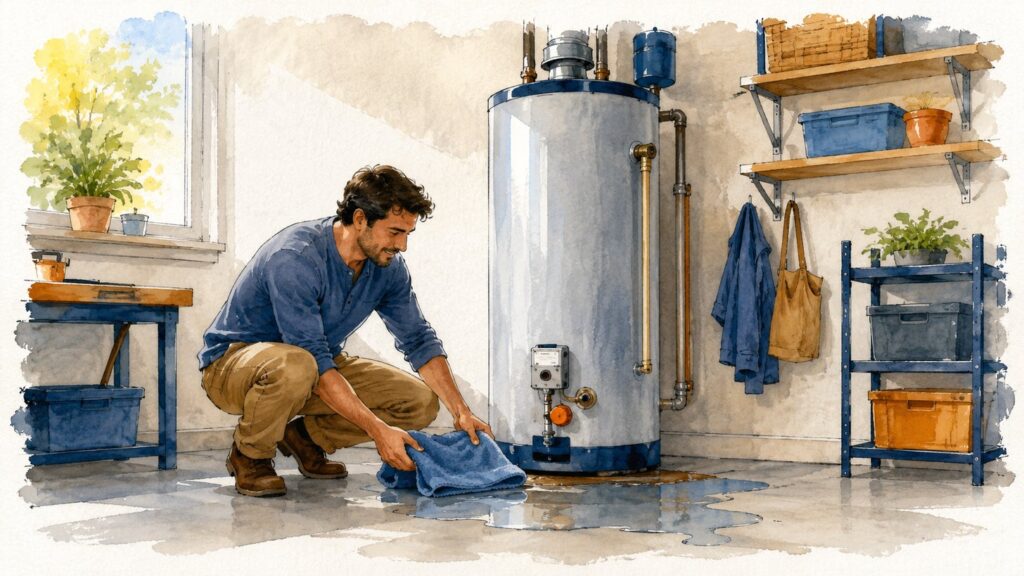
You walk into the garage on a Saturday morning, and there it is: a thin shine of water spreading across the slab under your tank. Maybe it’s a slow drip you can hear, maybe it’s a puddle that wasn’t there yesterday. Either way, your stomach drops a little.
Take a breath. Most of these problems are fixable, and a few of the causes are minor. The trick is knowing what you’re looking at, what to do in the next few minutes to protect your home, and when the job belongs to a licensed pro. Let’s walk through all of it.
First, make sure it’s actually the water heater
Water travels, so a puddle near the tank doesn’t always come from the tank. Before you panic, wipe the area dry and watch where the water shows up again.
Check the pipes overhead, a nearby washing machine, and the water softener if you have one. If the tank itself stays dry and the water keeps coming from somewhere else, you’ve saved yourself a lot of worry. If the wet trail leads back to the unit, keep reading.
Why your water heater is leaking
A tank leak almost always traces back to one of a handful of spots. Knowing which one helps you tell a quick fix from a full replacement. Here are the usual reasons a water heater leaking shows up in Sacramento area homes.
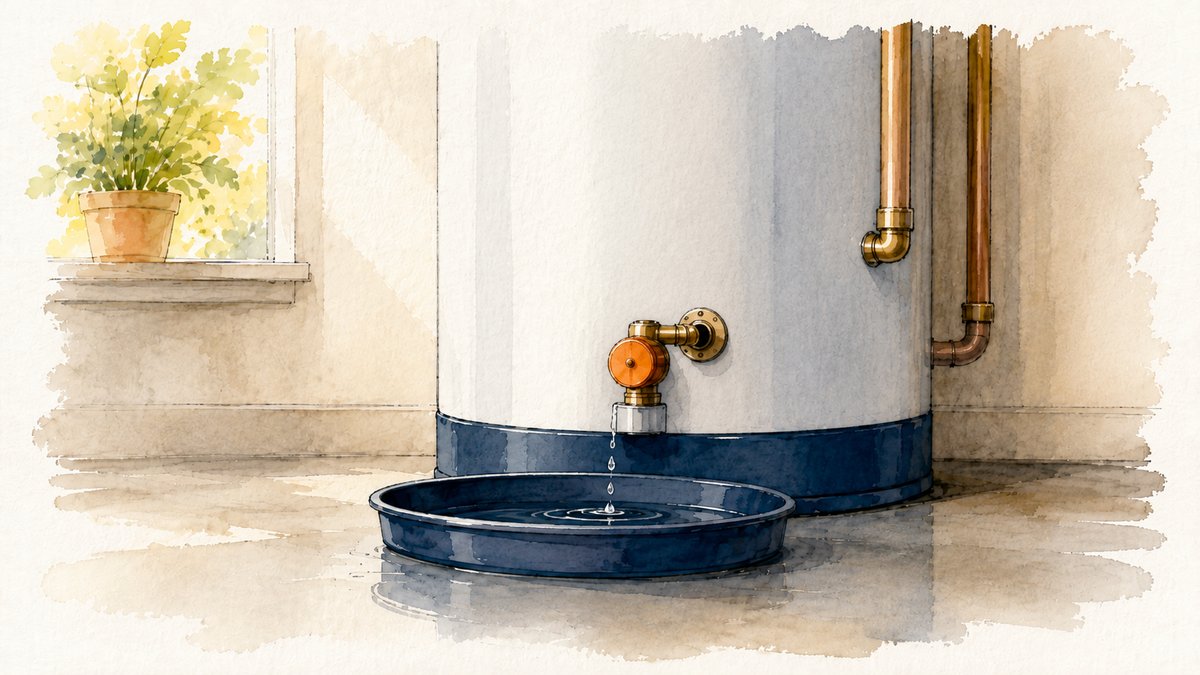
The drain valve at the bottom
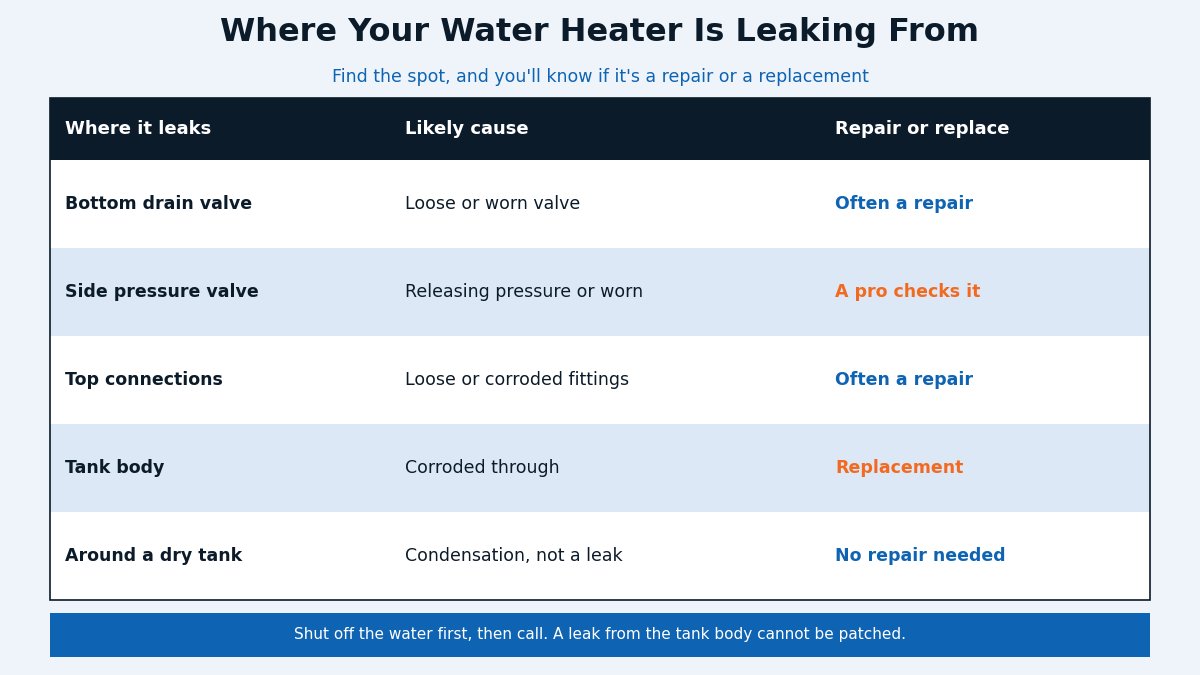
That little spigot near the base is the drain valve, and it’s a common culprit. Over the years it can loosen or stop sealing, especially after a flush. A steady weep from that valve is often a straightforward repair rather than a sign the tank is done.
The temperature and pressure relief valve
The TPR valve is a safety device that opens to release pressure if the tank gets too hot or too pressurized. If it’s dripping, it might just be doing its job, or it might be worn. Because it deals with pressure and scalding hot water, this one always goes to a pro, never a do it yourself swap.
Loose connections at the top
Water lines connect at the top of the tank, and those fittings can loosen or corrode over time. A leak up top often shows as water running down the outside of the tank. It’s usually more contained than a bottom leak, but it still needs a look.
A worn anode rod or inside corrosion
Inside every tank is a sacrificial anode rod that rusts so the tank doesn’t. Once it wears out, corrosion starts eating at the tank itself. Our hard Sacramento Valley water speeds this up, which is why local tanks can age faster than the label suggests.
A cracked or corroded tank
This is the serious one. When water seeps from the body of the tank itself, usually near the bottom, the steel has corroded through. A cracked tank almost always means replacement, because there’s no reliable way to patch it. The good news is you’ll usually get warning signs, like rusty water or small puddles, before it fails outright.
Condensation that only looks like a leak
Sometimes what you’re seeing is condensation, not a leak. On a cold morning, or right after a big hot water draw, moisture can bead on the tank and drip. If it clears up once the tank warms and stays dry after, you’re probably fine.
What to do right now
If the tank is clearly leaking, a few quick moves protect your home while you line up help. Here’s the order to do them in:
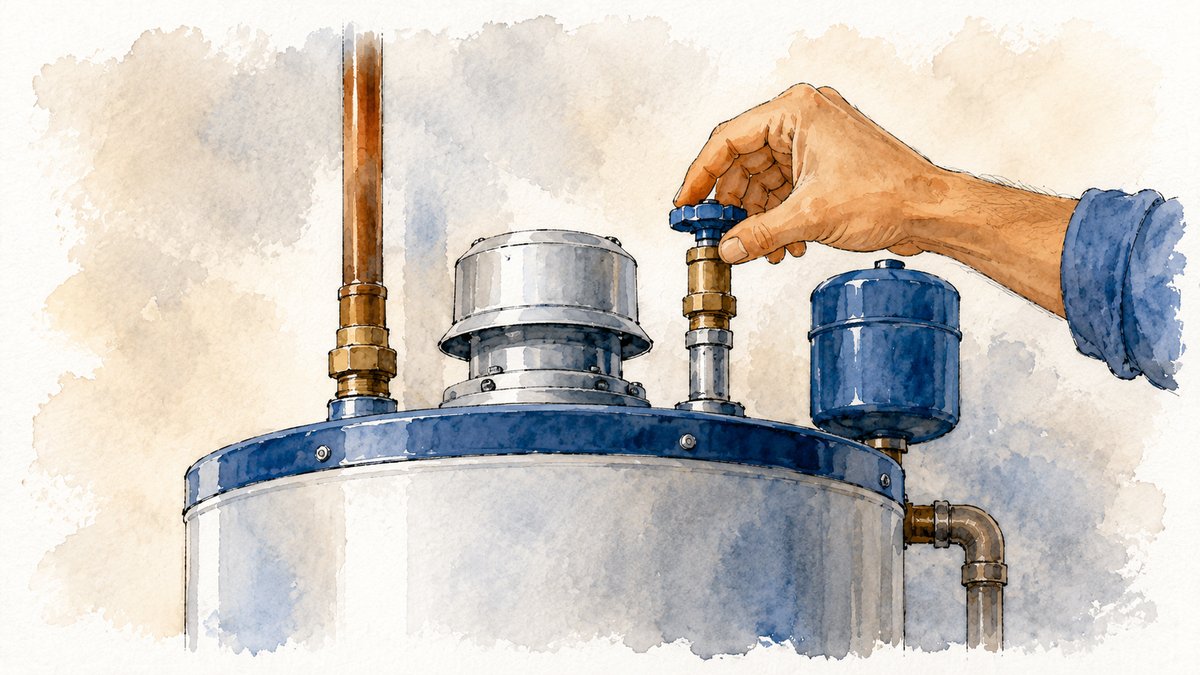
- Shut off the water to the tank. Turn the valve on the cold line at the top clockwise until it stops. If you can’t find it, use your home’s main shutoff.
- Turn off the power or gas. For an electric unit, switch off its breaker. For a gas unit, set the gas control to the off or pilot setting.
- Contain the water. Lay down towels, move boxes and anything else off the floor, and set a pan under an active drip.
- Snap a few photos. If the tank has failed, they help with your records and with getting a fast quote.
Those steps are safe for any homeowner and buy you time. If you ever smell gas at a gas unit, skip the rest, leave the house, and call your gas utility or 911 first.
What you can handle and when to call a pro
Shutting off the water, killing the power, and mopping up are all fair game. Beyond that, most water heater repairs are a job for a licensed technician, and there’s no shame in that. Water, gas, and electricity together are not a place to guess.
Call a pro when the leak comes from the tank body, when the TPR valve is involved, when you can’t find the source, or when the unit is old and leaking. Our leaking water heater team can find the source fast and tell you honestly whether it’s a repair or a replacement. If the tank turns out to be fine but you’ve lost hot water in the process, our guide to no hot water causes covers what to check next.
Common mistakes to avoid
A leak is stressful, and stress leads to a few predictable slip ups. Watch for these:
- Waiting to see if it stops on its own. A leak never fixes itself, and a small drip can become a flooded garage fast.
- Keeping the water running to the tank. Leaving the supply on just feeds the leak and the damage.
- Trying to tighten or replace the TPR valve yourself. That’s pressure and scalding water, so leave it to a pro.
- Ignoring rusty water or a musty smell. Those are early warnings that the tank is corroding from the inside.
The U.S. Department of Energy has helpful general guidance on water heater care and safety at energy.gov if you want to read more.
A real Sacramento example
A family in Roseville noticed a small ring of water under their garage tank and figured it could wait until after the weekend. By Sunday the drip had become a steady stream, and the bottom of the tank had rusted through.
Because they’d shut the water off early, the damage stayed limited to the garage floor. The tank couldn’t be saved, but a same day replacement had them back to normal by evening. The lesson they took away was simple: shut the water off first, then call, and don’t wait on a leak.
How to prevent the next leak
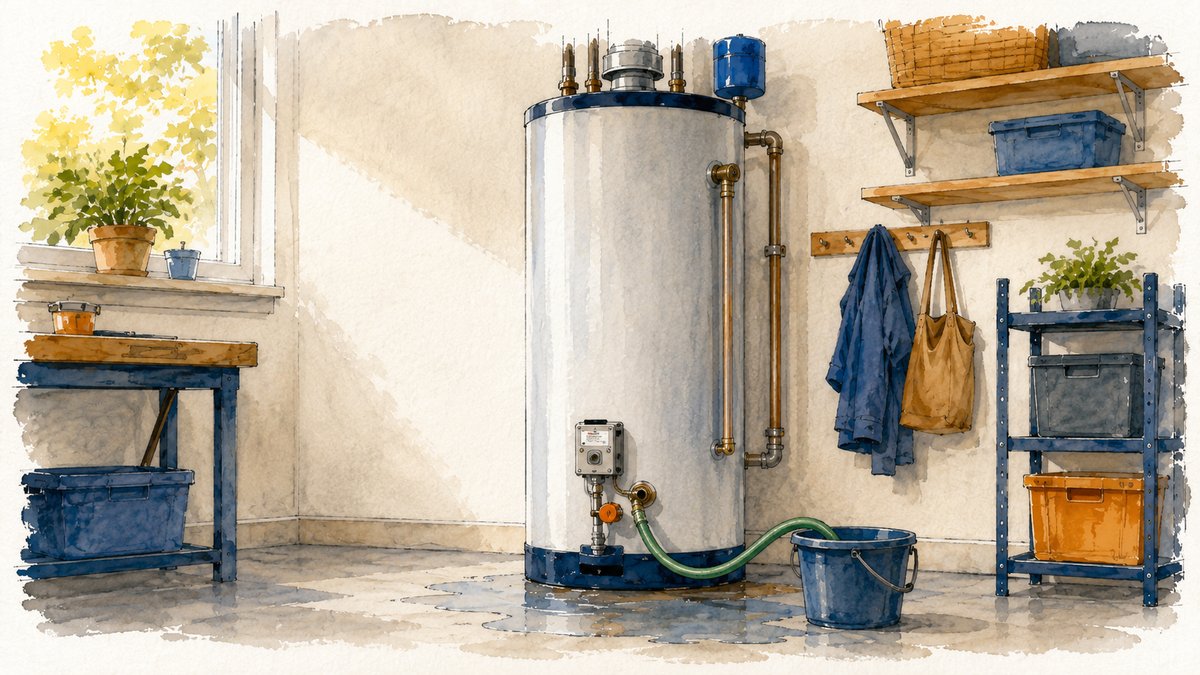
You can’t make a tank last forever, but a little care buys you years. Flushing the tank once a year clears out the sediment that speeds up corrosion, which matters a lot with our hard water.
Having the anode rod checked before it’s fully spent can add real life to the tank. And a quick yearly look at the valves and connections catches small drips while they’re still cheap to fix. Our water heater maintenance page walks through what a tune up covers.
Key takeaways
- Confirm the water is really coming from the tank before you worry, since water travels.
- A water heater leaking usually starts at the drain valve, the TPR valve, the top connections, or the tank body.
- Right now: shut off the water, cut the power or gas, and contain the mess. Those steps are safe for anyone.
- A leak from the tank body means replacement. Valve and connection leaks are often repairable, but leave pressure valve work to a pro.
- Yearly flushing and an anode rod check are the best ways to prevent the next one.
Frequently asked questions
Is a leaking water heater an emergency?
A small drip isn’t a crisis, but it won’t wait either. A tank that’s actively pouring water can flood a room quickly, so shut off the water supply and call for help the same day.
Can a leaking water heater be repaired?
Sometimes. A leak from the drain valve or a loose connection is often repairable. A leak from the tank body itself means the tank has corroded through and needs replacing.
How long can I wait to fix it?
Don’t. Even a slow leak damages flooring and framing, invites mold, and tends to get worse. The cheapest outcome almost always comes from acting fast.
Why is my water heater leaking only sometimes?
An on and off drip can be condensation, a TPR valve releasing pressure during heavy use, or an early stage tank leak. It’s worth a look before it turns steady.
Sacramento Water Heating is a water heater information and lead request service. We are not a licensed plumbing contractor. This article is general information and not professional plumbing advice, and a licensed local pro should assess your specific water heater.
Spotting water under your tank and want it handled today? Call for fast local help or request a free quote, and we’ll connect you with a licensed Sacramento pro who can stop the leak and get you dry again.