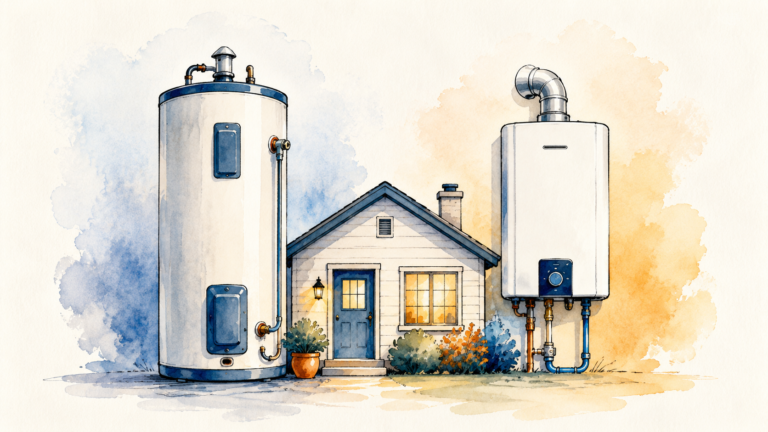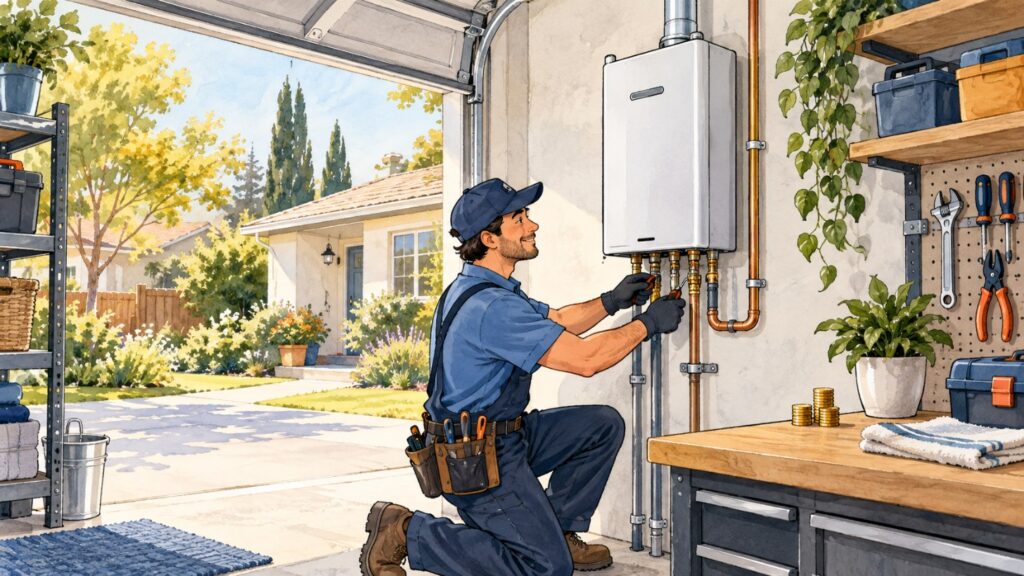
Three plumbers walk through the same Sacramento garage in one week. One quote comes back modest. The next is close to double. The third lands in the middle with half a page of notes about the gas line.
Nobody is trying to take advantage of you. That spread is normal, for a reason most homeowners never hear out loud: a tankless unit isn’t really a product you buy. It’s a small remodel of the plumbing, gas, venting, and sometimes the electrical panel in one corner of your house.
Which means the box on the wall is often the smaller half of the bill. So here’s how tankless water heater cost actually breaks down, what pushes a quote up in a Sacramento home, and where you still have room to save.
What your quote is actually paying for
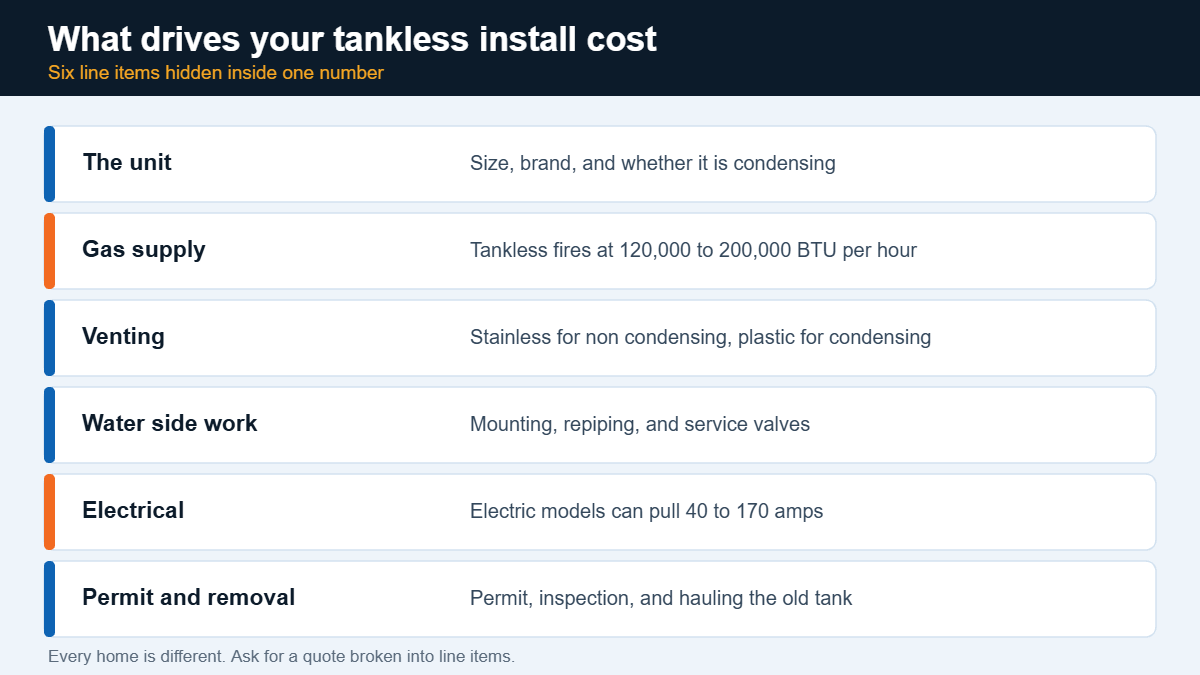
A tankless quote is six things bundled into one number. Seen separately, the differences between bids stop feeling random.
- The unit itself: size, brand, and whether it’s condensing.
- Gas supply: whether your existing line can feed it, or has to be upsized.
- Venting: the material, the route, and where it exits the house.
- Water side work: mounting, repiping, and adding service valves.
- Electrical: a gas unit needs an outlet, an electric unit needs far more.
- Permit, inspection, and hauling off the old tank.
Two houses can buy the identical unit and end up thousands apart because of the other five lines. Which is why a quote given over the phone is worth very little.
Why gas lines drive so much of the tankless water heater cost
This is the biggest surprise on most quotes, and it comes down to how differently the two systems burn fuel.
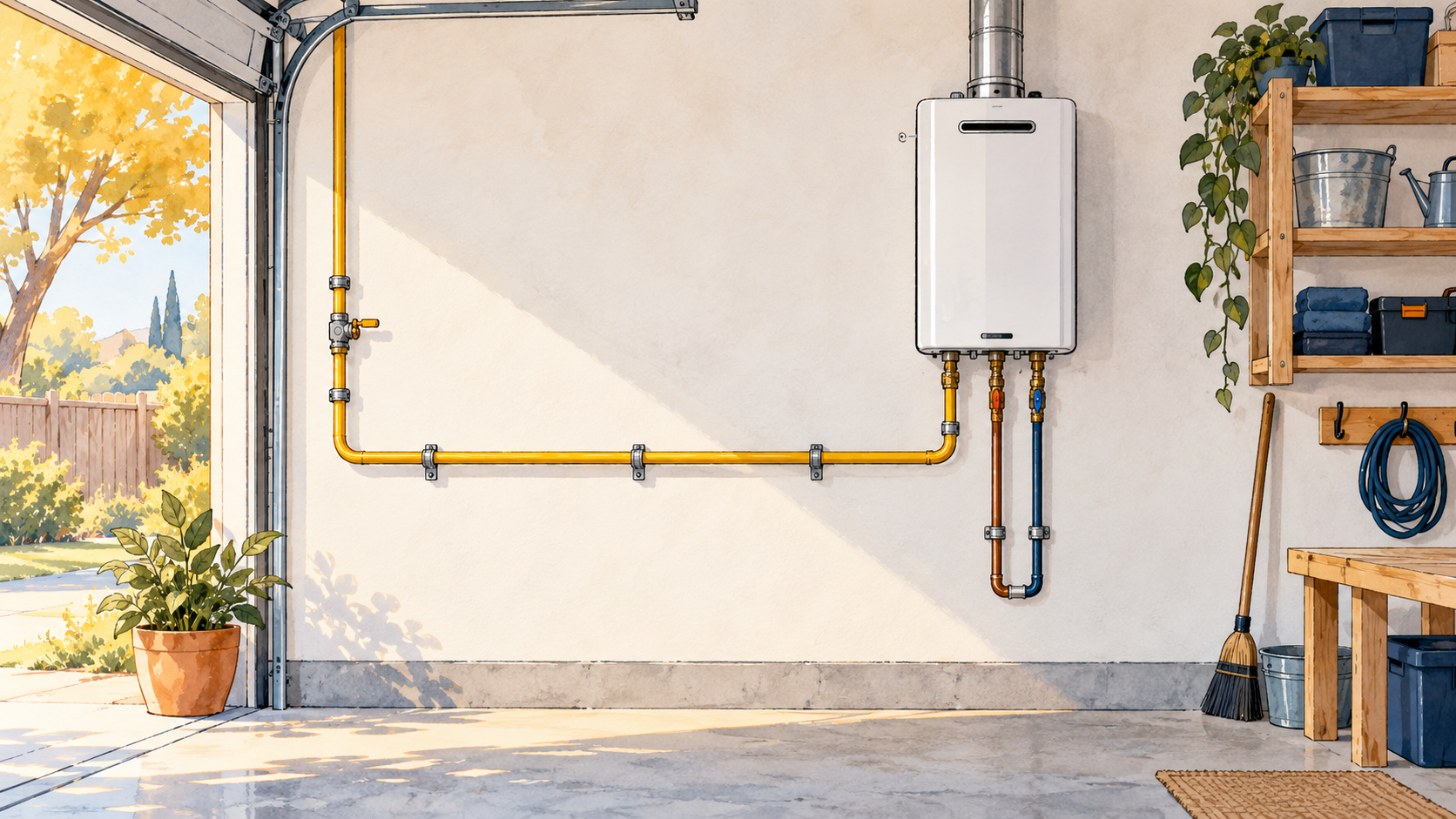
A standard gas tank sips fuel slowly all day, usually around 30,000 to 50,000 BTU per hour. A whole house tankless unit heats water the instant you open a tap, so it fires hard and fast, commonly in the range of 120,000 to 200,000 BTU per hour.
The half inch gas line that happily fed your tank for fifteen years often can’t deliver that much fuel. Many installs need a 3/4 inch line, and on longer runs a full 1 inch line, so pressure holds up at the burner when the unit works hardest.
If your meter sits on the far side of the house, that’s a long run of new pipe. Honest work, but not cheap, and it’s the line item that separates a friendly quote from an eye watering one.
Gas or electric, and how that changes the math
Electric tankless units look appealing at first. Cheaper unit, no venting to run. Then you get to the panel.
A whole house electric model can pull anywhere from about 40 to 170 amps depending on size, usually spread across two to four double pole breakers. Electricians generally don’t load a panel past roughly 80 percent of its rating, so a 200 amp service already feeding central air, a range, and a dryer may not have the headroom.
Plenty of older homes around Carmichael and Citrus Heights still run on 100 or 125 amp service. There, an electric tankless quietly turns into a panel upgrade. That’s a big part of why most whole house installs around here end up gas. Our guide on gas and electric water heaters covers how each one behaves day to day.
Condensing or non condensing changes the venting bill
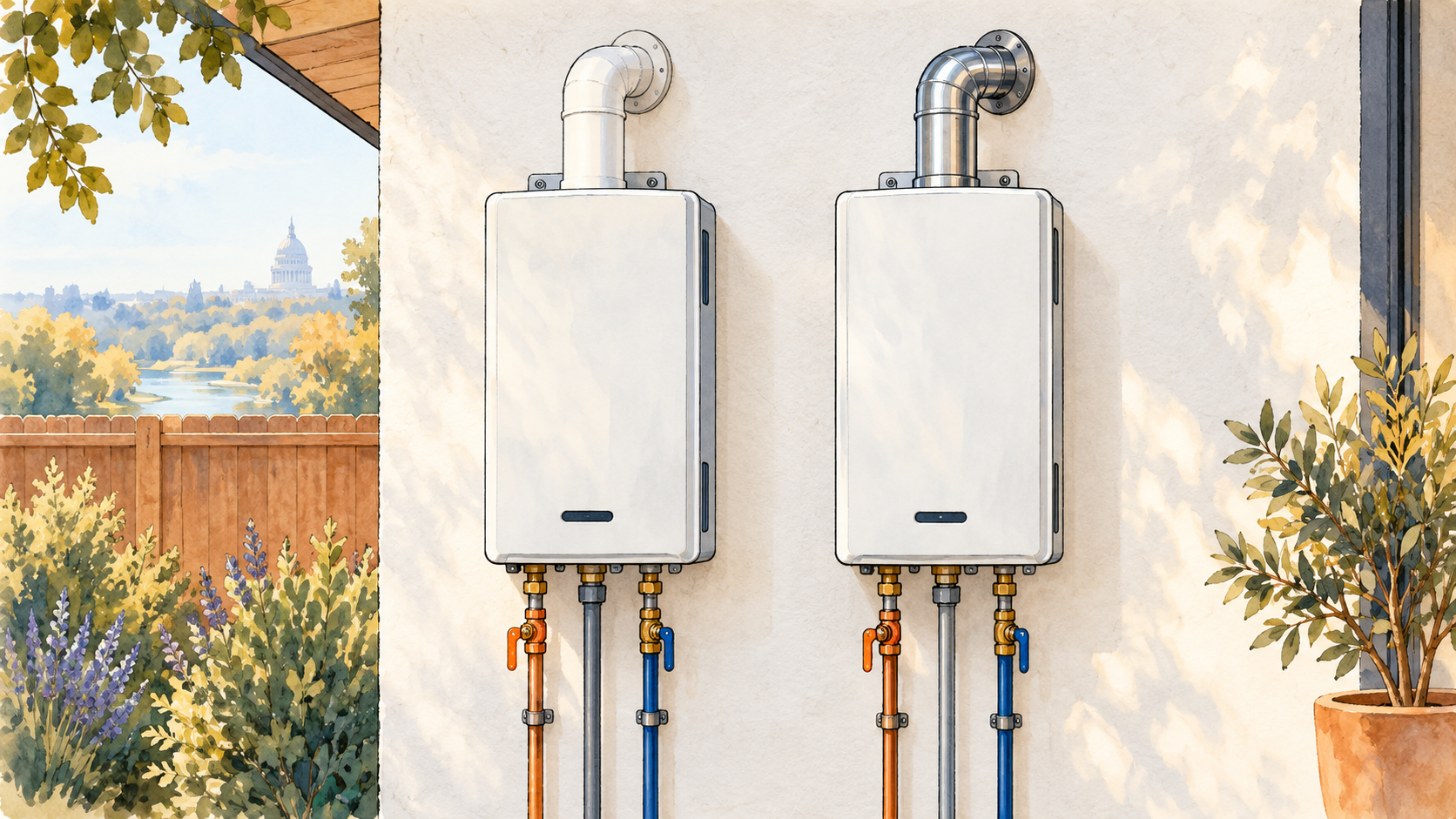
Gas tankless units come in two flavors, and the difference shows up in the exhaust.
Non condensing units
These use one heat exchanger and send out hot exhaust, so they need stainless steel venting rated for high temperature. The unit is cheaper. The vent material usually isn’t.
Condensing units
A second heat exchanger pulls extra heat from the exhaust before it leaves, cooling it enough to vent through plastic pipe. They run more efficiently, some reaching around 0.96 on the efficiency rating, and cost more up front. They also produce condensate, so they need a drain.
Neither is automatically right. What decides it is where the vent has to exit, whether there’s a drain nearby, and how long you plan to stay.
What makes Sacramento installs their own animal
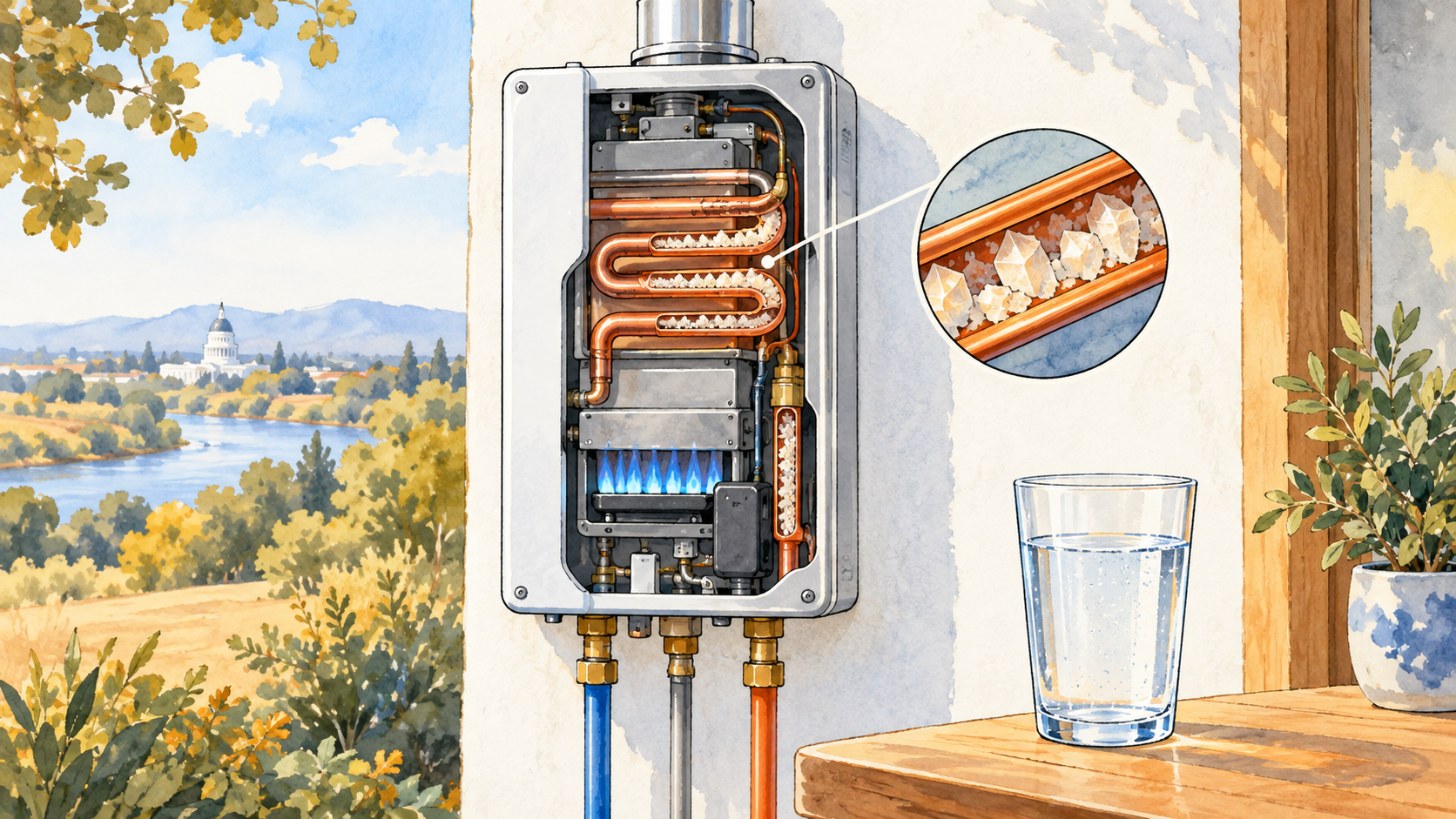
Hard water is the big one. Valley water carries a lot of dissolved calcium and magnesium, and a tankless heat exchanger has narrow passages that scale up faster than the bottom of a tank. A good installer adds isolation valves so the yearly descaling flush is a simple job instead of a small demolition.
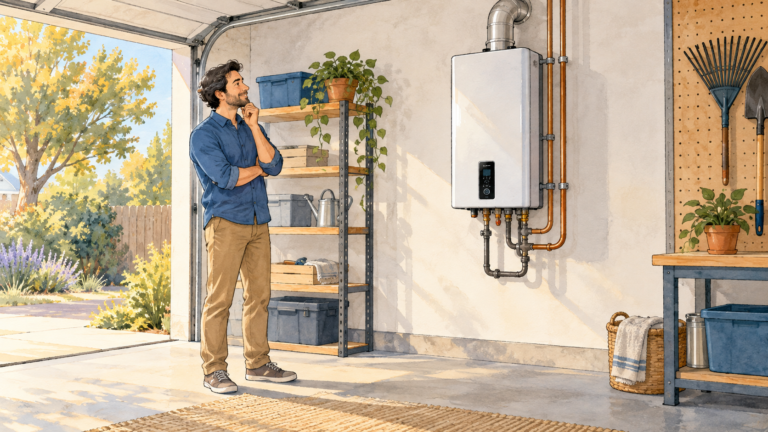
Most homes here sit on a slab, with the heater in the garage or a hall closet. Garage installs are often the easy case, since an exterior wall is right there for the vent. Interior closets in Folsom or Roseville two story homes are where vent routing gets creative and hours climb.
Winter matters too. Incoming water gets noticeably colder in January, so the unit has to raise the temperature further for the same shower. That pushes sizing up, which pushes BTU up, which loops right back to the gas line. Our maintenance and flushing page covers that yearly service.
A real Sacramento example
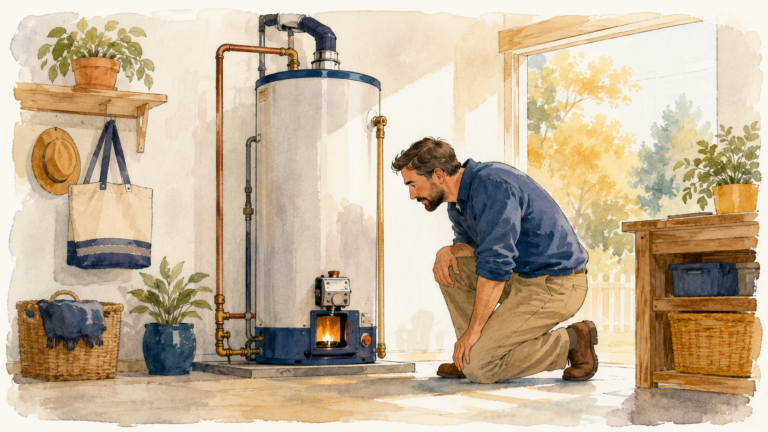
Picture a single story home from the seventies in Citrus Heights. The tank sits in the garage, it’s twelve years old, and it just started leaving a damp ring on the slab. The owners have wanted tankless for years and figure this is the moment.
The first bid is low and simple. The second is much higher and includes forty feet of new gas pipe from the meter, because the old half inch line was sized for a tank and nothing more. The third splits the difference with a smaller condensing unit venting straight out the garage wall.
The low bid wasn’t cheaper. It just hadn’t looked at the gas line yet. That’s the version that ends in a change order halfway through installation day.
What it costs to own after installation day
The install is the loud number. The quieter one is the next fifteen years, and that part leans tankless.
A tank spends all day reheating water nobody is using. A tankless unit only fires when you open a tap, which is why the Department of Energy notes these systems can be roughly 24 to 34 percent more efficient in homes using about 41 gallons of hot water a day or less.
Lifespan helps too. A well maintained tankless unit often runs 15 to 20 years, while a typical tank lands around 8 to 12. On our water that longer life is conditional. Descaling isn’t optional here, so fold that yearly service into the true tankless water heater cost the way you’d budget for an air filter.
Mistakes that quietly raise your bill
- Buying the unit online first. If it doesn’t match your gas line, vent path, or panel, you’ve bought a very heavy paperweight.
- Sizing by tank gallons. Tankless units are sized by flow rate and temperature rise. One that feels fine in September can disappoint in January.
- Skipping service valves. They cost a little at install and save real money at every flush.
- Ignoring the exclusions. Gas line work, venting, the permit, and old tank removal are what thin quotes leave out.
- Skipping the permit. Unpermitted work has a way of surfacing during a home sale.

How to keep your tankless water heater cost reasonable
You have more room to move than you’d think, and most of it gets used before you sign.
Start by having someone look at the gas line size, the meter location, the vent path, and the panel. That tells you which tier your house falls into. Then ask for quotes broken into line items rather than one lump sum, which makes comparing bids fairer to the honest bidder.
Ask about rebates too. SMUD and PG&E have run efficiency programs for water heating and the terms change often, so confirm what’s available on the day you buy rather than trusting a number in an article.
And be open to the answer being no. If your gas line needs a long run and your household is small, a high efficiency tank may serve you better. Our tank versus tankless comparison shows where each one wins, and the broader Sacramento water heater cost guide covers replacement in general.
Key takeaways
- The unit is the smaller part of the bill. Gas, venting, and electrical work drive the spread.
- Tankless units fire far harder than tanks, so a half inch gas line often has to be upsized.
- Whole house electric models can force a panel upgrade in older Sacramento homes.
- Condensing units cost more and vent cheaply. Non condensing units do the reverse.
- Valley hard water makes yearly descaling and isolation valves necessary.
- Get the house assessed before you shop, and insist on line item quotes.
Frequently asked questions
Is a tankless water heater cheaper to run?
Usually, because it doesn’t reheat a full tank around the clock. How much you save depends on your household’s hot water habits, and lower use homes tend to see the biggest improvement.
Do you need a permit to install one in Sacramento?
Water heater replacement generally requires a permit and inspection, and gas or venting changes make that more important, not less. Requirements and fees vary by city and county, so let your installer pull it.
How long does a tankless installation take?
A straightforward swap in a garage with an adequate gas line can be a single day. Add pipe work, a tricky vent route, or panel work and it stretches to two days or more.
What to do next
The useful first step isn’t picking a brand. It’s learning what your house needs, so the quotes you collect are comparable and the tankless water heater cost you’re quoted reflects your actual home. We can connect you with a licensed local pro who checks the gas line, vent path, and panel before quoting.
If the old tank is leaking or you’re suddenly out of hot water, our pages on leaking water heaters and water heater repair cover what to do right now, and the repair or replace guide helps you decide. Comparing options? See tankless installation or a standard installation and replacement.
Sacramento Water Heating is a water heater information and lead request service. We are not a licensed plumbing contractor. This article is general information and not professional plumbing advice, so a licensed local pro should assess your specific water heater, gas supply, and venting before any work begins. Costs, rebates, and permit requirements change and vary by city, unit, and situation.
Need help sooner? Give us a call for fast local help, or request a free quote and we’ll match you with a pro near you. You can also reach us on our contact page.