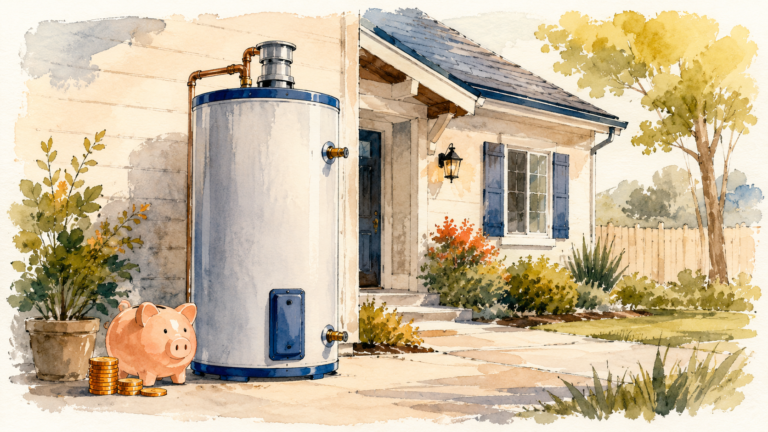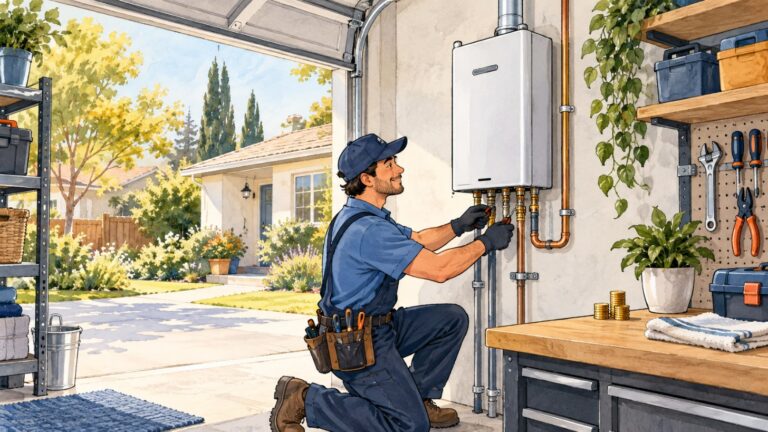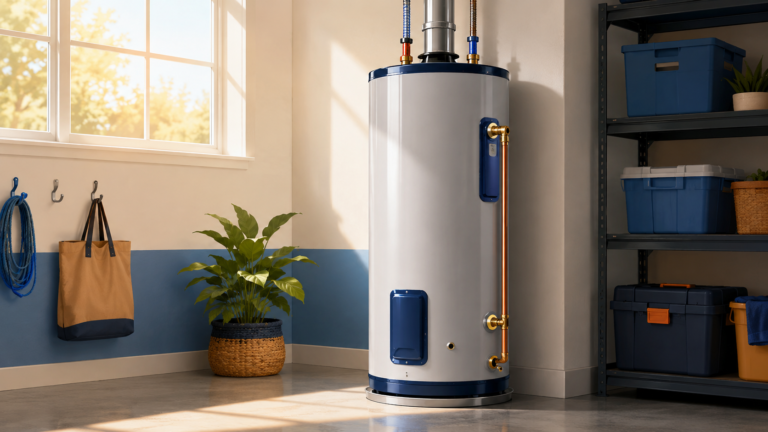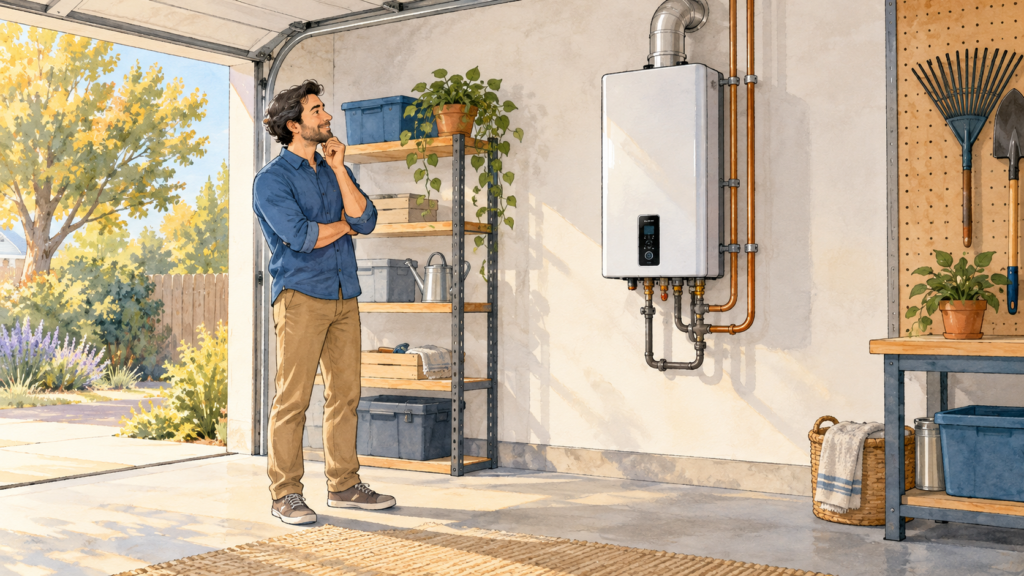
A Folsom homeowner called last winter with a dead tank in the garage and two quotes on her kitchen table. One was for another 50 gallon tank. The other was for a slim box on the wall promising hot water that never runs out.
What she wanted to know was which one she’d be happier with in ten years. That’s a different question than which costs less on install day.
Around Sacramento, going tankless pays off beautifully in some homes and quietly disappoints in others. The difference is how your household uses hot water, what your gas line and panel can handle, and how long you plan to stay put.
What actually changes when the tank goes away
A storage tank keeps 40 or 50 gallons hot around the clock, reheating through the night, through your workday, and through every weekend you spend somewhere else.
A tankless unit heats water only while it’s moving. Open a hot tap and a burner fires in a second or two. Close it and the unit burns nothing at all between draws. Almost everything about whether a tankless water heater is worth it flows from that, because your limit stops being gallons in a tank and becomes how fast the unit can heat.
The honest case for going tankless
You stop paying to keep water hot all night
The Department of Energy puts demand water heaters at roughly 24 to 34 percent more efficient than a storage tank in homes using about 41 gallons of hot water a day or less. In heavier use homes, near 86 gallons a day, that edge narrows to around 8 to 14 percent.
Notice which way that runs. The gain is widest for smaller households.
It should outlive two tanks
A well maintained tankless unit commonly runs 15 to 20 years. A glass lined tank in our climate gives you 8 to 12 before the steel gives up.
Tankless units are also built to be serviced, so a failed sensor or fan is usually a repair. When a tank rusts through there’s no fixing it, which is why our repair or replace guide leans on age.
You get the floor space, and no 50 gallons waiting to let go
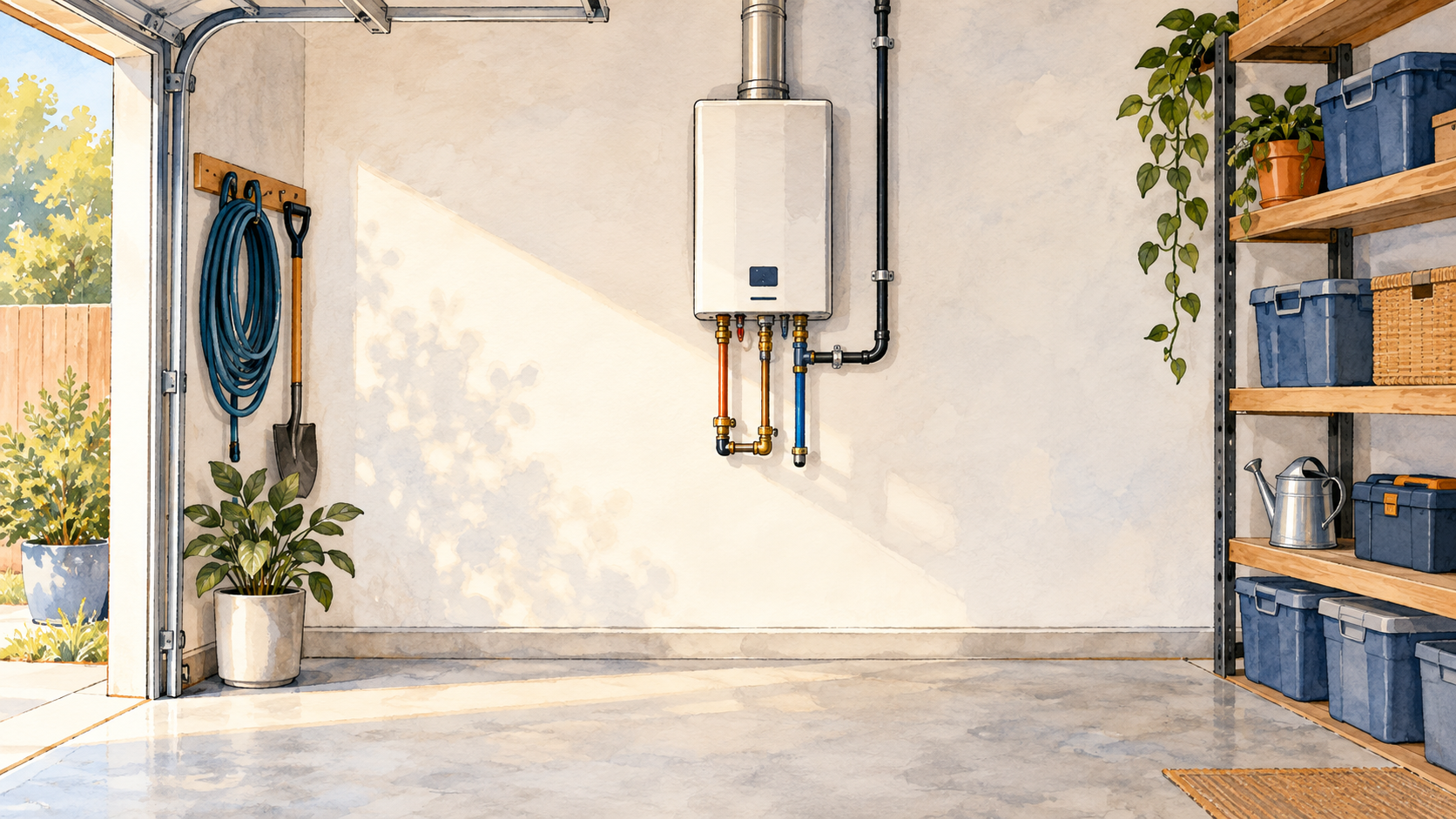
Most homes here sit on slab with the heater in the garage or a hall closet. A tank eats a footprint about two feet square. A tankless unit hangs on the wall, about the size of a carry on suitcase.
Tanks also fail wet, which is why a leaking water heater is so urgent. Tankless can still drip at a fitting, but there’s no stored volume to dump into your drywall.
The honest case against it
The install is where the money goes
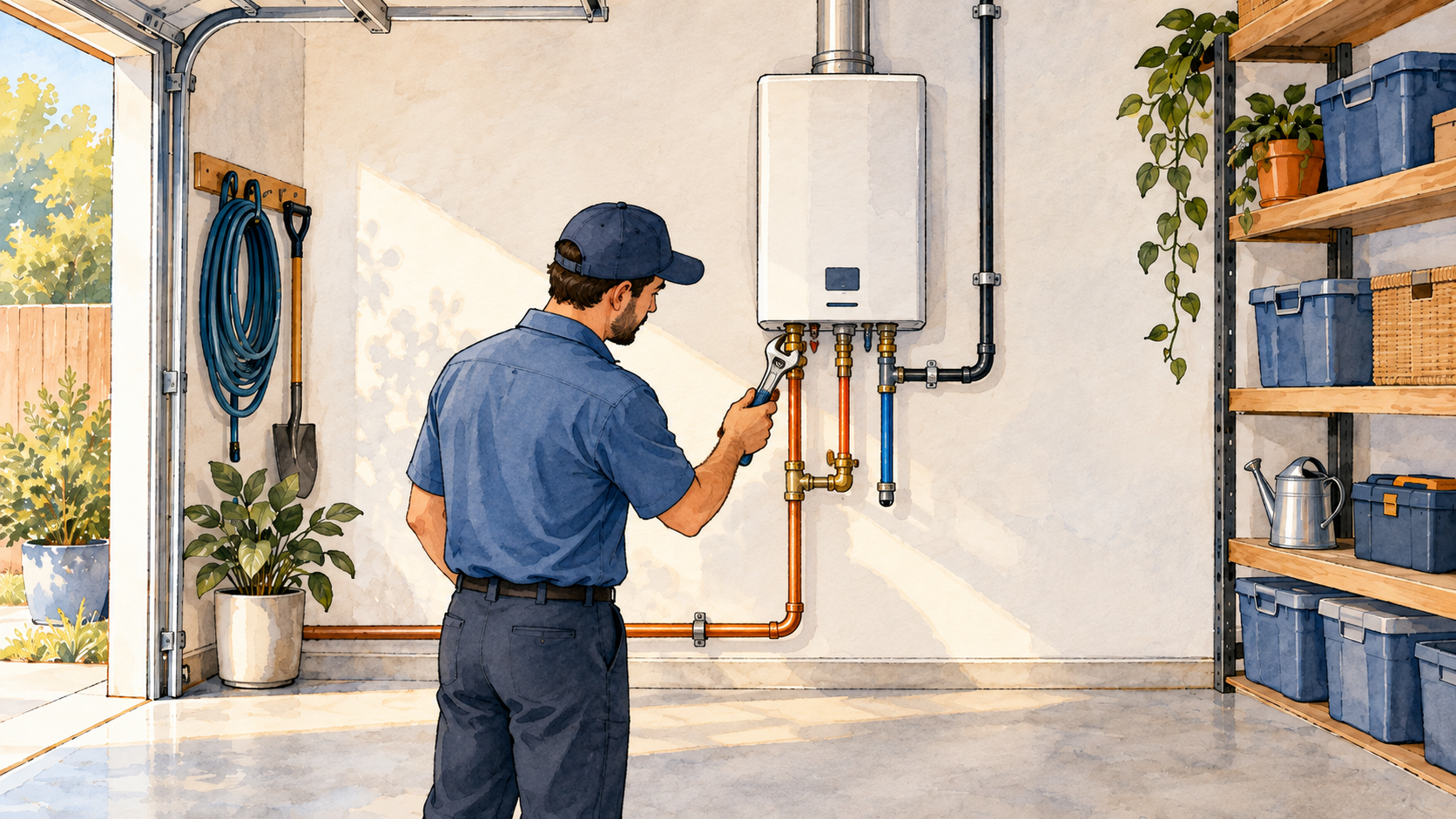
Tank for tank is mostly disconnecting and reconnecting. Tank to tankless often means new plumbing, new venting, and a rebuilt fuel supply.
A gas tank sips roughly 30,000 to 50,000 BTU per hour. A whole house tankless unit fires closer to 120,000 to 200,000. The half inch gas line that fed your tank for fifteen years often has to grow to 3/4 inch or larger, which on a long run from the meter means real trenching and real labor.
Electric is its own story. A whole house electric unit can pull 40 to 170 amps, more than a 100 amp panel in an older Citrus Heights or Carmichael home can give without a service upgrade. That’s why the install, not the unit, is where this gets expensive, and we break it down in our tankless cost guide.
Your limit becomes flow, not volume
People hear “endless hot water” and picture unlimited. What you get is unlimited duration at a limited rate, measured in gallons per minute, not gallons in a tank.
A shower runs roughly 2 to 3 gallons per minute, a kitchen faucet about 1 to 2. Run two showers and the laundry and you’re asking one unit for six or seven gallons a minute at full temperature.
Size it right and nobody notices. Size it small to save money and the shower cools every time the dishwasher kicks on.
Hard water is rough on a heat exchanger
Valley water carries a real load of calcium and magnesium. In a tank those minerals settle harmlessly on the bottom until there’s enough to rumble and pop.
In a tankless unit they bake onto the narrow passages of the heat exchanger, the one part doing all the work. Scale there chokes flow, drops efficiency, and eventually throws error codes.
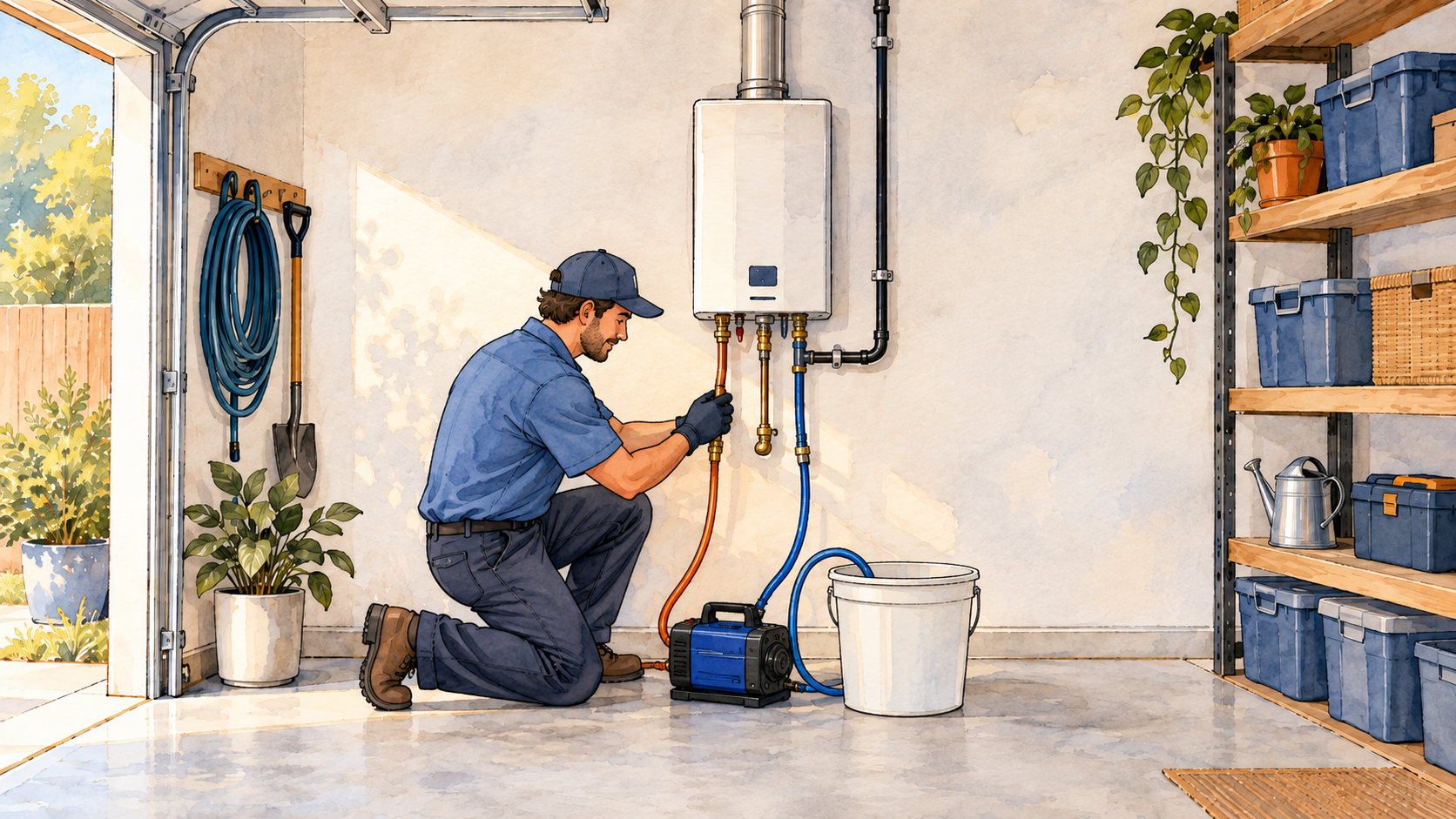
The fix is a descaling flush once a year, every year, plus isolation valves installed on day one. Skip it and you’ve turned a 20 year machine into a 10 year one. See our maintenance and flushing page.
The wait, and the cold burst
A tankless unit needs a second or two to fire, so hot water at a far bathroom arrives a touch later. Turn a tap off and back on quickly and you may catch a brief cool stretch sitting in the pipe. A recirculation setup or a small buffer tank smooths both out.
So is a tankless water heater worth it for your house?
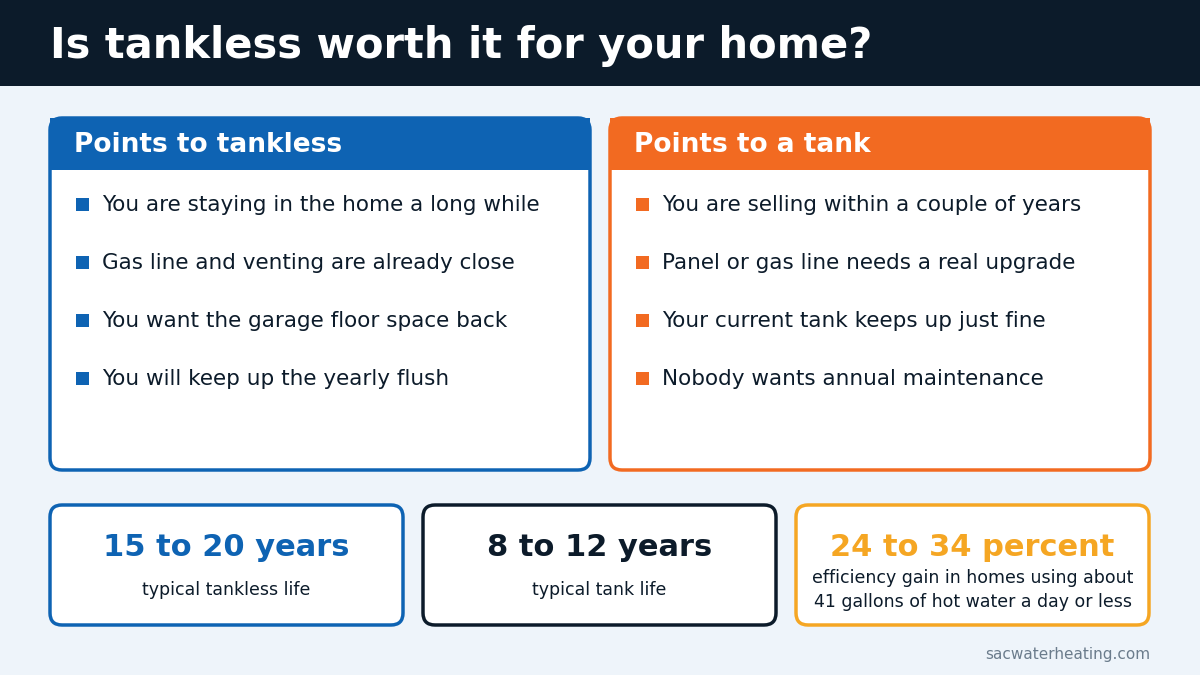
It pays off when you’re staying a long while, your gas line and venting are already close to what the unit needs, you want the floor space back, and somebody will keep up with the yearly flush.
It doesn’t when you’re selling in a couple of years, when your panel or gas line needs a serious upgrade first, or when your tank keeps up fine and nobody is complaining. A well sized tank is not a bad appliance, as our tank vs tankless comparison lays out.
The factor that outweighs the rest is how long you plan to stay in the house. Savings are real but gradual, so the payoff needs years to catch a bigger install bill.
What Sacramento adds to the math
Start with colder incoming water in January. Our supply runs noticeably cooler in winter than in August, and the unit has to close that whole gap. The heater that handles two showers easily in July can fall a step behind on a cold morning. Honest sizing uses winter numbers, never summer ones.
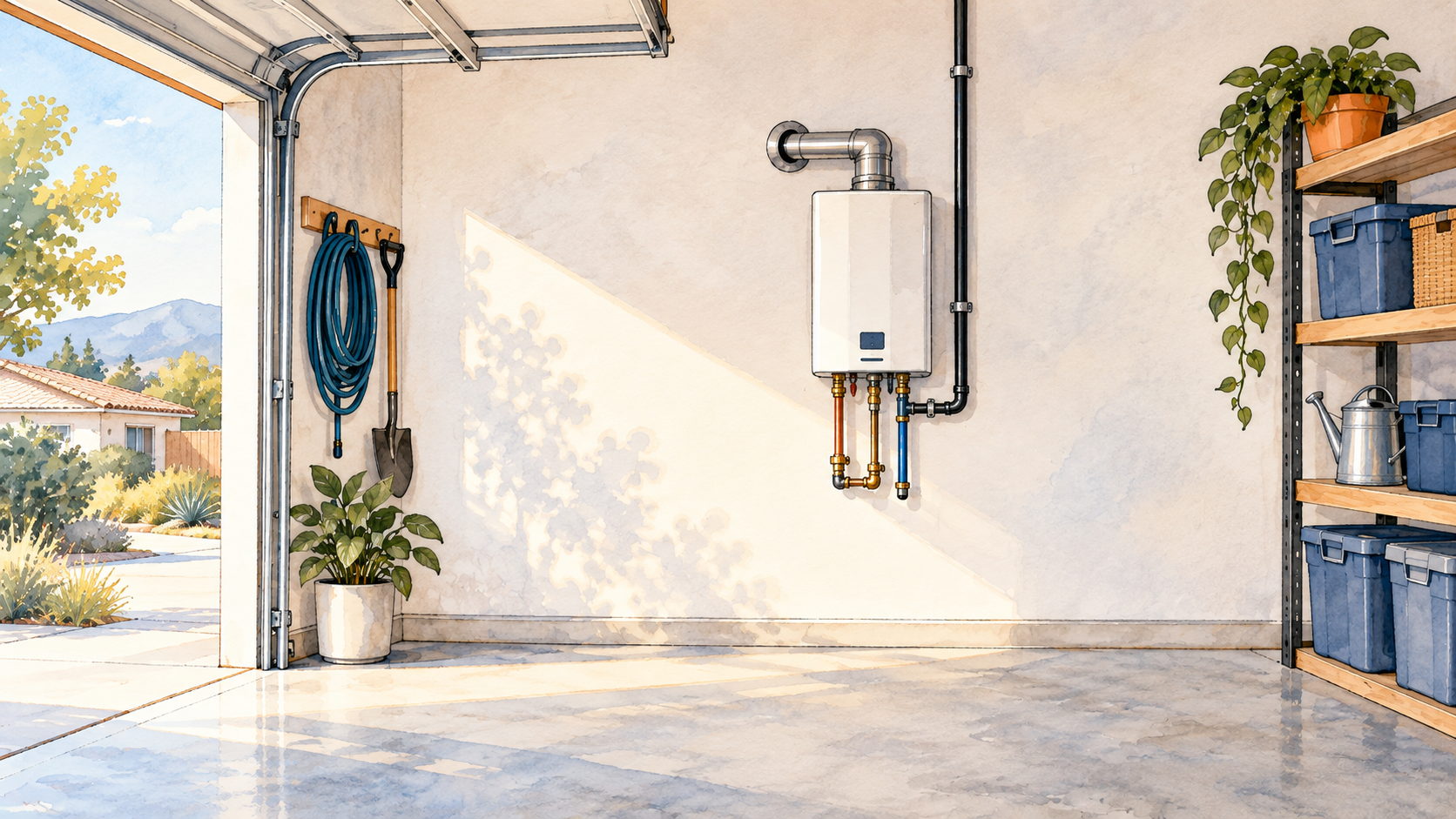
Working the other way: most local homes put the heater in an attached garage with an exterior wall a few feet off, which keeps venting simple. That’s a big cost swing in houses where the heater sits in an interior closet.
A real Sacramento example
An Elk Grove couple, empty nesters, eighteen years in the house with no plans to move. Their heater sat three feet from the garage wall, the gas run was short, and light daily use put them squarely in the band where the efficiency advantage is widest. Easy yes.
Same week, a Rancho Cordova family in a 1970s home with a 100 amp panel, a long gas run, and a listing planned inside two years. Tankless meant a panel upgrade and a new gas line before the first hot shower, so a high recovery tank won.
Common mistakes homeowners make
- Sizing off summer water temperatures, then wondering why winter showers cool down.
- Buying the unit online and hoping an installer will just hang it. Gas, venting, and electrical all have to match the unit.
- Skipping isolation valves to trim the quote, which makes every future flush slower and pricier.
- Treating the annual descaling as optional. Many manufacturers tie warranty coverage to documented maintenance, so flush it or the warranty may not help you.
- Comparing box prices while ignoring what each quote includes for gas, venting, and permits.
What to do next
Start with three numbers: years you expect to stay, hot taps running at once on a busy morning, and the age of your heater. Those settle most of it.
Then have a licensed pro check the gas line size, the vent path, and the panel. That visit turns a general question about whether a tankless water heater is worth it into a real answer for your address.
One safety note. Gas line sizing, venting, and pressure relief work are never a homeowner project. Shutting off your water or flipping a breaker is fine. Past that, call a licensed pro, on both gas and electric units. If your heater is limping now, a quick repair visit buys time to choose well instead of fast.
Key takeaways
- Nothing is spent keeping a reservoir hot overnight, and the Department of Energy puts the gain near 24 to 34 percent in homes using about 41 gallons a day or less.
- Expect 15 to 20 years from a maintained unit versus 8 to 12 from a tank.
- Gas line size, venting, and panel capacity decide most of the install cost.
- Your ceiling becomes flow rate, and winter water lowers that ceiling.
- A yearly descaling flush is a requirement here, not a suggestion.
- Staying put lets the savings catch up.
Frequently asked questions
How long until a tankless unit pays for itself?
It depends on your install and how much hot water you use, so no honest installer gives a number over the phone. Smaller households see the widest efficiency gain but save fewer total dollars. Larger households save more dollars at a narrower percentage. Ask your installer to walk the math with your quote.
Is a tankless water heater worth it in an older home?
Sometimes, but older homes are where the install surprises live. A 100 amp panel, an undersized gas line, or a heater buried in an interior closet can each add significant work. Get all three checked before you commit.
What happens during a power outage?
Gas tankless units need electricity for their controls and fan, so they stop during an outage. A tank holds whatever was already hot, a small point in its favor.
Getting a straight answer for your home
Anyone who hands you a verdict without seeing your gas line is guessing. We can connect you with a licensed local pro who’ll look at what you have and say honestly which way to go. More on our tankless water heater installation page, or compare it against a standard tank replacement. The Department of Energy guide to demand water heaters is a good neutral read.
Sacramento Water Heating is a water heater information and lead request service. We are not a licensed plumbing contractor. This article is general information, not professional plumbing advice, and a licensed local pro should assess your water heater, gas supply, and electrical service before you buy. Costs, rebates, and code requirements change and vary by home.
Want to know where your home lands? Request a free quote or reach out for fast local help from a pro who knows Sacramento homes.