You are standing in the garage, staring at the water heater that has served your Sacramento home for years, and the hot water is acting up again. A repair might get you through the week, but part of you wonders if you are just throwing money at a unit that is on its way out. It is one of the most common questions we hear, and the honest answer comes down to a few clear things you can check yourself.
The short version: age is the biggest tiebreaker. If your heater is well under a decade old and the problem is a single simple part, a repair usually makes sense. If it is past the ten year mark, leaking, or racking up one fix after another, replacement is almost always the smarter money. Here is how to tell which side of that line you are on when you decide whether to repair or replace your water heater.
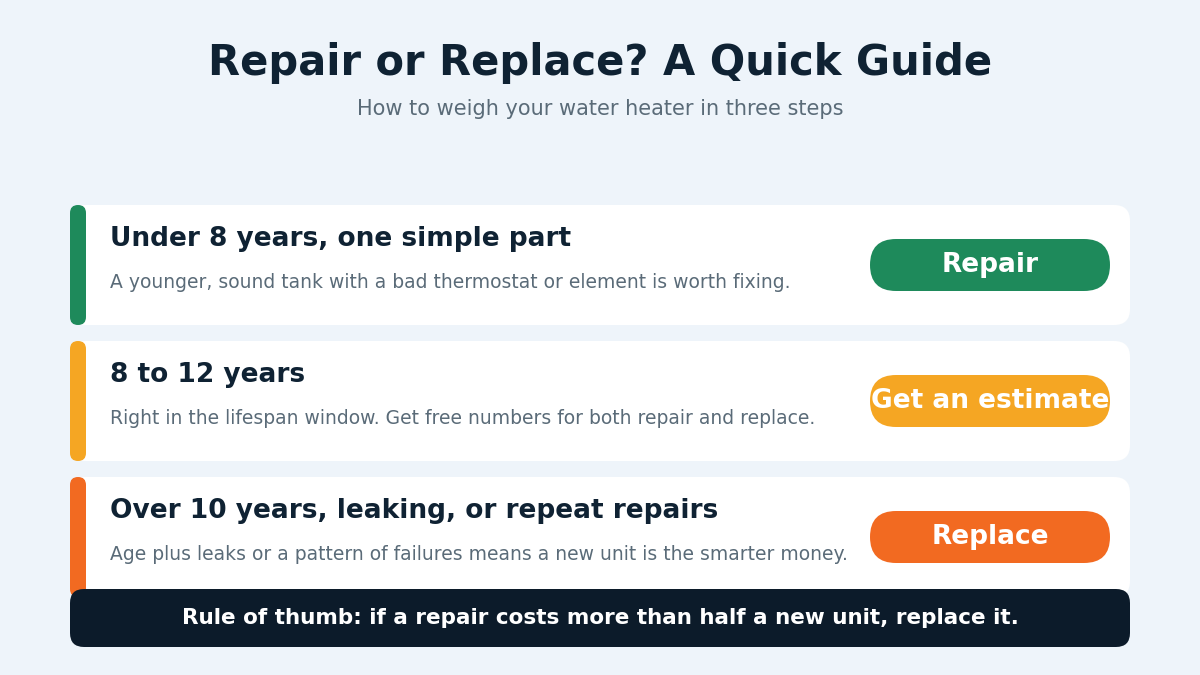
Start with the age of your water heater
A standard tank water heater lasts about 8 to 12 years. A well maintained tankless unit can run closer to 20. That range is the first thing a good local pro looks at, because it changes all the math.
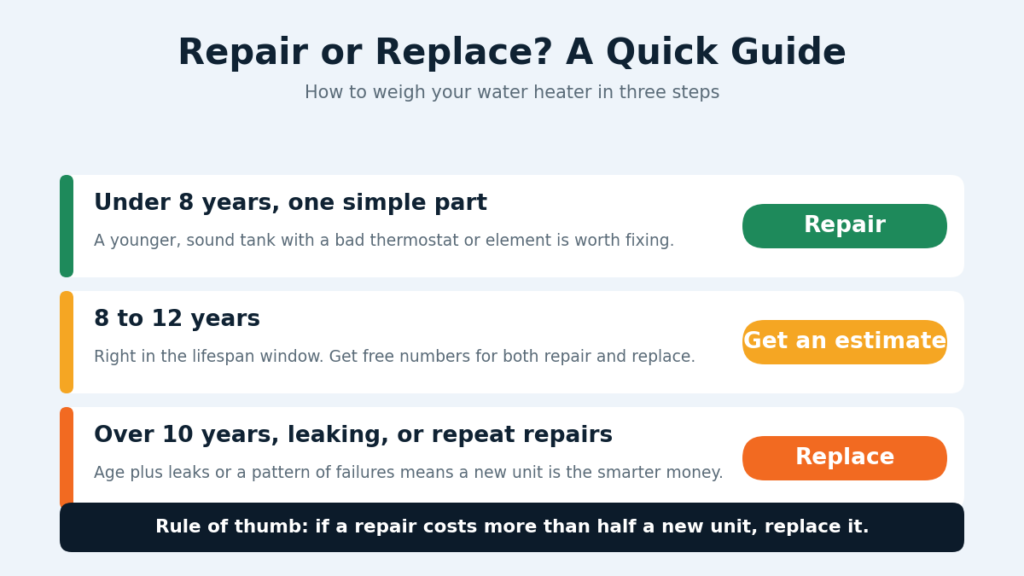
Once a tank passes ten years, repairs stop being a good investment. The internal parts have all aged together, so fixing one failure often just buys a little time before the next one shows up. If you do not know how old your unit is, look for the manufacture date. It is usually built into the serial number on the label, and a plumber can decode it for you in seconds.
Sacramento adds its own wrinkle. Our hard water leaves sediment that builds up in the tank over the years, which makes heaters here work harder and sometimes wear out toward the shorter end of that 8 to 12 year window. If yours has never been flushed, assume it has aged a little faster than the calendar says.
The simple repair or replace rule of thumb
Here is the test the pros use. If a repair costs more than about half the price of a new unit, replace it. A new water heater comes with a fresh warranty and another decade of service, so pouring half its cost into an old tank rarely pays off.
The same logic applies to how often it breaks. If you have called for two or three repairs in a short stretch, that points to broader internal wear, not a run of bad luck. One more fix probably will not be the last. When the repairs start stacking up, the money is better spent on a replacement that ends the cycle.
We are careful never to promise a specific price, because it depends on the type and size of the unit and your home setup. That is exactly why the pros in our network give you a free, upfront estimate for both options, so you see real numbers for your situation before you decide.
Signs it is time to replace
Some symptoms point strongly toward a new unit rather than a patch. Watch for these:
- Water pooling around the base. A tank that leaks from the bottom usually has internal corrosion, and that is not something you repair. If you see water at the base, read our guide on a leaking water heater and get it looked at quickly before it floods the garage.
- Rusty or brown hot water. When the hot water runs discolored, the inside of the tank may be rusting through. Once rust is in the tank itself, replacement is coming.
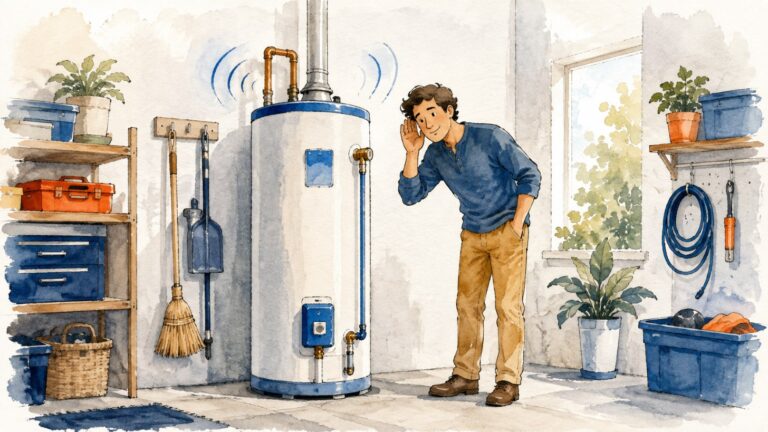
- Rumbling or popping sounds. That noise is hardened sediment on the tank floor. It makes the heater less efficient and stresses the metal, and by the time it is loud, the tank is often near the end.
- You keep running out of hot water. If a unit that used to keep up now leaves you with cold showers, and it is on the older side, its capacity is fading. Our post on no hot water causes covers what to check first.
- Repeated breakdowns past ten years. Age plus a pattern of failures is the clearest replace signal there is.
When a repair is the right call
Replacement is not always the answer. Plenty of problems are worth fixing, especially on a younger unit. A repair usually makes sense when:
- The heater is under about eight years old and has been reliable until now.
- The issue is a single well understood part, like a thermostat, a heating element, or a pilot assembly.
- The tank itself is sound, with no leaks and no rust in the water.
- The unit is still under warranty, which can cover parts and make a fix a clear win.
No hot water from an electric unit, for example, is often just a tripped element or a bad thermostat, which is a straightforward water heater repair, not a reason to replace the whole thing. The trick is matching the fix to the age and condition of the tank.
What Sacramento homeowners should weigh
Beyond age and cost, a few local factors are worth a thought when you are on the fence.
Energy efficiency. Water heating is one of the larger pieces of a home energy bill. A newer, more efficient unit can trim that cost over the years, which nudges the scales toward replacing an old, tired heater sooner rather than limping it along. The Department of Energy has a clear overview of water heating options if you want to compare types.
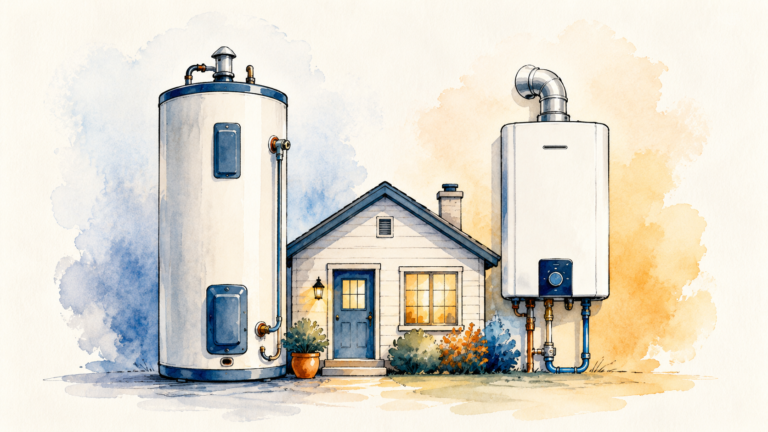
The tankless question. If you are going to replace anyway, it is worth asking whether a tankless upgrade fits your home. Tankless units give you endless hot water and can last longer, though they cost more up front. A local pro can tell you whether one makes sense for your household size and setup.
Where the unit lives. Most Sacramento homes keep the water heater in the garage or a utility closet, which means a slow leak can sit unnoticed and cause real damage. If your tank is aging, replacing it on your terms beats waiting for it to fail on a holiday weekend.
Common mistakes to avoid
- Waiting until it floods. An old tank rarely gives much warning before it splits. Acting on the early signs is far cheaper than a cleanup.
- Repairing a heater well past its lifespan. Fixing a 14 year old tank is usually good money after bad. Age should always be part of the call.
- Skipping the yearly flush. Sediment shortens the life of every water heater, and it is worse with Sacramento hard water. A yearly flush is cheap insurance that pushes the replace date further out.
- Guessing at the cost. Do not assume. A quick free estimate for both repair and replacement takes the guesswork out.
Key takeaways
- Age is the biggest factor. Under about eight years, lean toward repair. Past ten years, lean toward replace.
- If a repair costs more than half a new unit, or you have had several repairs lately, replace it.
- Leaks at the base, rusty water, and loud rumbling usually mean the tank is done.
- Simple part failures on a younger, sound tank are worth repairing.
- Get a free, upfront estimate for both options so you decide on real numbers.
Frequently asked questions
How long does a water heater last? A standard tank lasts about 8 to 12 years, and a well maintained tankless unit can last up to 20. Hard water and skipped maintenance shorten that.
Is it worth repairing a 10 year old water heater? Usually not, if the repair is anything more than minor. Past ten years the odds of another failure soon are high, so replacement tends to be the better value.
What is the first sign a water heater needs replacing? Water pooling at the base is the clearest one. Rusty hot water and loud rumbling are close behind.
Can I just replace one part instead of the whole unit? On a younger, sound tank, yes. A thermostat, element, or valve is a normal fix. On an old or leaking tank, a single part will not save it.
Sacramento Water Heating is a water heater information and lead request service. We are not a licensed plumbing contractor, and this article is general information, not professional plumbing advice. A licensed local pro should assess your specific water heater before you decide. Water heater work involves gas, electrical, and pressure systems, so leave hands on repairs to a professional.
Still not sure whether to repair or replace? Get a fast, free quote from a trusted local Sacramento pro who will look at your unit and give you honest numbers for both. Request your free quote or call the number at the top of the page.