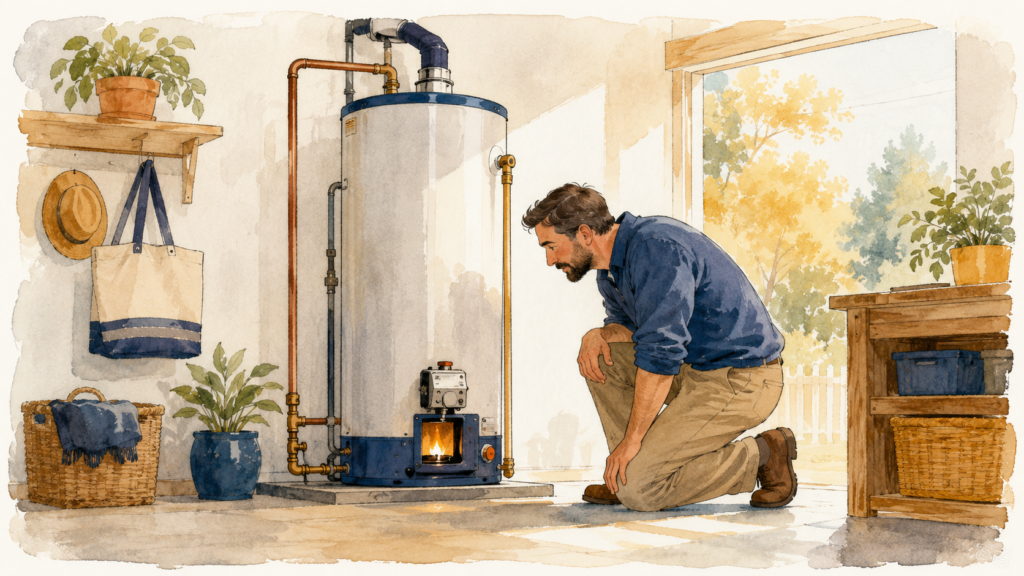
You head out to the garage on a cool Sacramento morning, pop the little cover off the bottom of the water heater, and find nothing. No small blue flame. Just a dark burner chamber and a shower upstairs that’s about to be very unpleasant.
So you relight it. It catches, holds for an hour, and then it’s out again.
That repeat is the part that matters. A flame that quits once could be a fluke. A pilot light that keeps going out is your water heater pointing at something specific: a worn part, or something around the unit interfering with how it burns. The list of causes is short, and a couple you can rule out yourself in two minutes of looking.
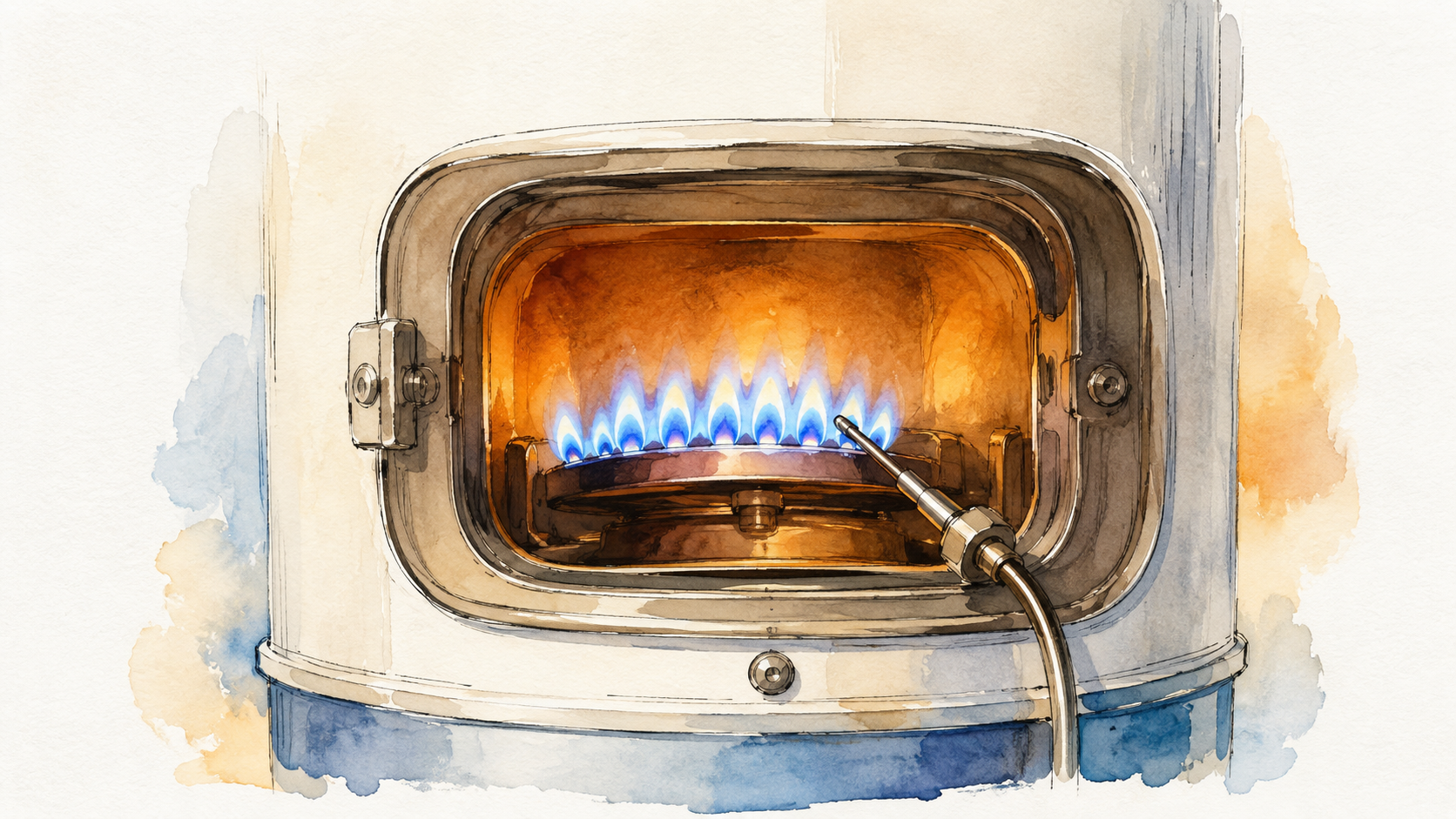
What that little flame is actually doing
A gas water heater doesn’t run its main burner all day. It keeps one small standing flame lit, and when the thermostat calls for heat, that flame lights the burner under the tank.
Sitting right in that flame is a thin metal probe called a thermocouple. Heat makes it produce a tiny electrical current, and that current is the only thing holding the gas valve open. Take the heat away and the gas shuts off within seconds.
That’s a safety feature, not a flaw. It also means nearly every pilot problem comes back to one question: is the flame reaching that probe, and can the probe still read it? Most gas tanks built in the last twenty years also add a sealed combustion chamber with a screen at the base that lets air in but won’t let flame out. Good for safety. Also one more thing that can clog.
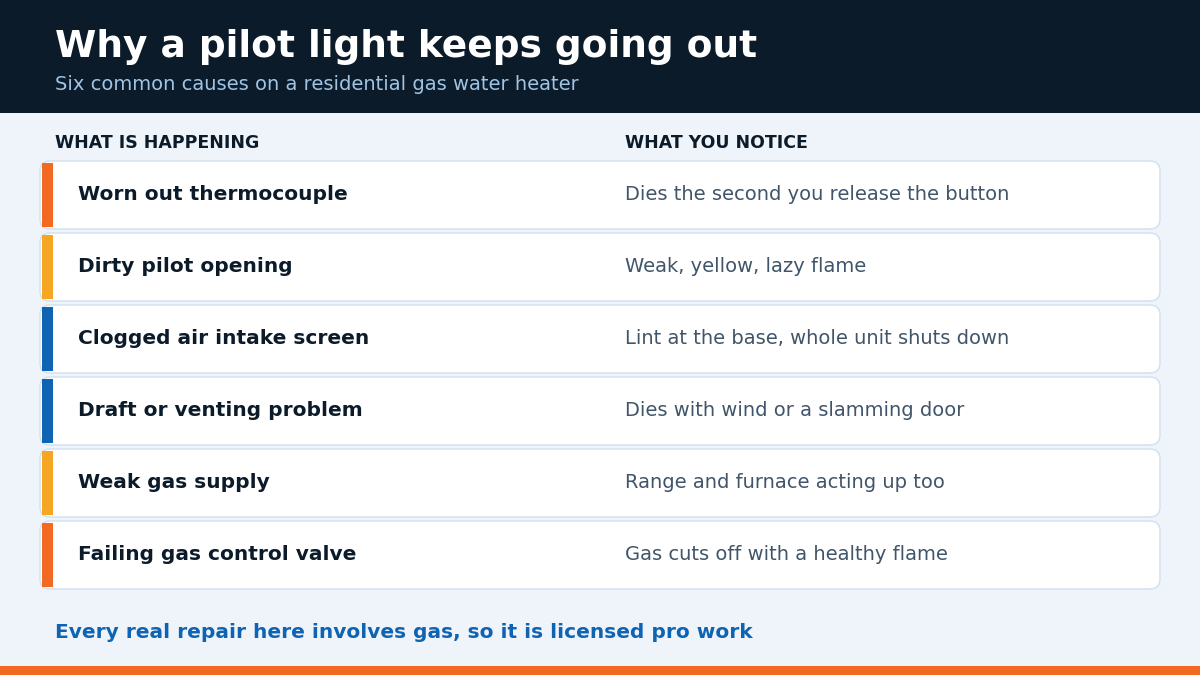
Why your pilot light keeps going out
The thermocouple has worn out or drifted
This is the one to bet on. If the flame burns steadily while you hold the control button down and dies the instant you release it, a failing thermocouple is the most likely answer.
They wear out at around ten years, and heat, soot, and corrosion all shorten that. The part is cheap, but replacing it means breaking into a gas connection, which is licensed pro work every time.
The pilot opening is dirty
Gas reaches the flame through a narrow tube and a very small opening, and dust, soot, and carbon slowly narrow it.
A starved flame looks weak, yellow, and lazy instead of a crisp blue point. It wanders, drifts off the sensor, and drops out. Cleaning usually fixes it.
The air intake screen is clogged
Here’s the cause people miss, and it’s everywhere in Sacramento garages. That screen at the base has to pull in combustion air. Lint, dust, and pet hair pack into it, especially when the heater sits a few feet from a clothes dryer.
Starve the burner of air and the flame goes lazy. Many units then trip a one time safety switch and shut down entirely, which feels like a dead water heater rather than a pilot problem.
Something is blowing it out
A pilot flame is small. A gap under the garage door on a windy day, a nearby vent, a door that slams. Any of it is enough.
If the flame dies right after a gust or after someone opens a door, you’re chasing a draft, not a broken part. A blocked or damaged flue does the same thing in reverse, pushing exhaust back down into the burner instead of drawing it out.
The gas supply is weak or interrupted
Low or inconsistent gas pressure starves the pilot. Sometimes that’s the utility side, sometimes a valve that isn’t fully open. Quick tell: if your range and furnace are also acting strange, the water heater probably isn’t the problem at all.
The gas control valve is failing
The thermostat and valve assembly bolted to the side of the tank is the brain of the whole thing. When it fails, it can cut gas off even with a healthy flame and a good sensor. This is the expensive one, and on an older tank it’s often where the replace conversation starts.
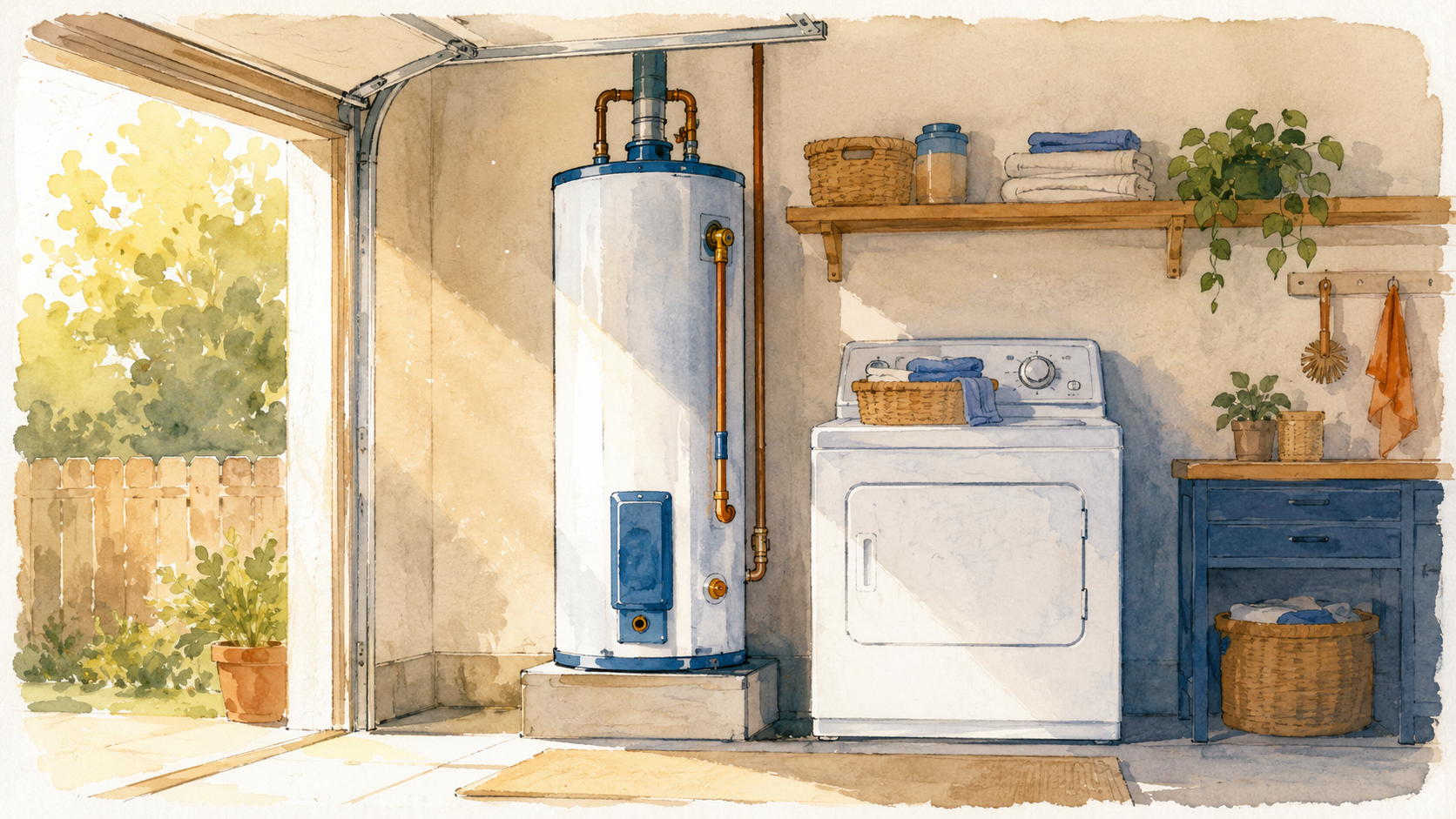
A real Sacramento example
A homeowner in Citrus Heights had relit the same water heater four times in two weeks. Each time it held a few hours, then quit. She was already collecting quotes on a new tank.
The unit was nine years old and sat in the garage about three feet from the dryer. The thermocouple looked fine. The intake screen at the base was packed grey with lint.
Cleaned out, the flame held. A service call instead of a replacement, and she kept a tank with a few good years left in it. That’s the argument for having someone look before you spend anything.
What you can safely check yourself
Homeowner territory is all observation. No tools, no gas fittings.
- Look at the flame through the viewing window if your unit has one. A healthy pilot burns blue and steady. Yellow, orange, or floppy means something is off.
- Check whether your other gas appliances are working. That tells you fast whether the trouble is the heater or the supply.
- Look for obvious drafts near the base, and for boxes or laundry crowding the unit.
- Notice the pattern. Instantly, after an hour, or only on windy days? That detail saves a technician real time.
- Read the age off the label. Most tanks run 8 to 12 years.
Follow your unit’s own relighting instructions once, printed right on the side. If it won’t stay lit after one honest attempt, stop. If there’s no hot water anywhere in the house, our guide to common no hot water causes covers what else could be going on.
When to stop and call a pro
Some of this isn’t a judgment call. If you smell gas at any point, don’t try to light anything. Get everyone out, then call your gas utility from outside.
Otherwise, stop and bring in help if any of these show up:
- You’ve relit it more than once and it keeps dropping out
- The flame burns yellow, sooty, or seems to lift away from the burner
- There’s soot or scorching around the draft hood at the top of the tank
- Anyone in the house has been getting headaches or feeling off, which can point to a venting problem
- Water is pooling under the tank, which is a separate and more urgent issue
Thermocouples, gas valves, orifices, and venting are all gas work, so they belong to a licensed plumber rather than a Saturday afternoon. A proper water heater repair visit starts with a combustion and draft check, which you can’t do from outside the tank.
Common mistakes homeowners make
- Relighting over and over. Every attempt releases gas into the chamber before ignition, and twice is plenty.
- Buying a thermocouple on a hunch. You’ll often be right, sometimes not, and either way the swap is gas work.
- Storing things against the heater. Boxes and laundry baskets block airflow and feed dust into the intake screen.
- Shrugging off a yellow flame. Blue means complete combustion, so yellow means the air and fuel mix is off.
- Replacing the whole tank without a diagnosis. Under about eight years old, a pilot fault is usually a part, not the whole tank.
Repair it or replace it?
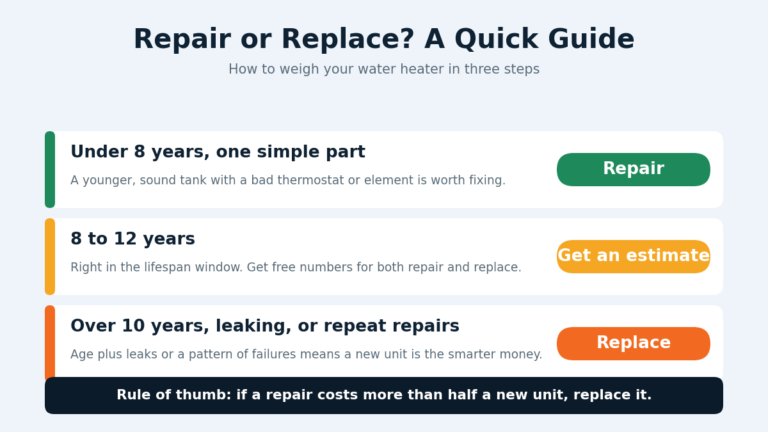
Age settles most of this. Under eight years, fix the part. Past twelve, especially with rust at the fittings, rumbling from the bottom, or a repair estimate creeping toward half the price of a new unit, replacement usually wins.
Our guide on whether to repair or replace your water heater walks through the math, and the Sacramento water heater cost guide covers what actually drives the number. If it’s time, our installation and replacement page explains how that goes.
Keeping it from happening again
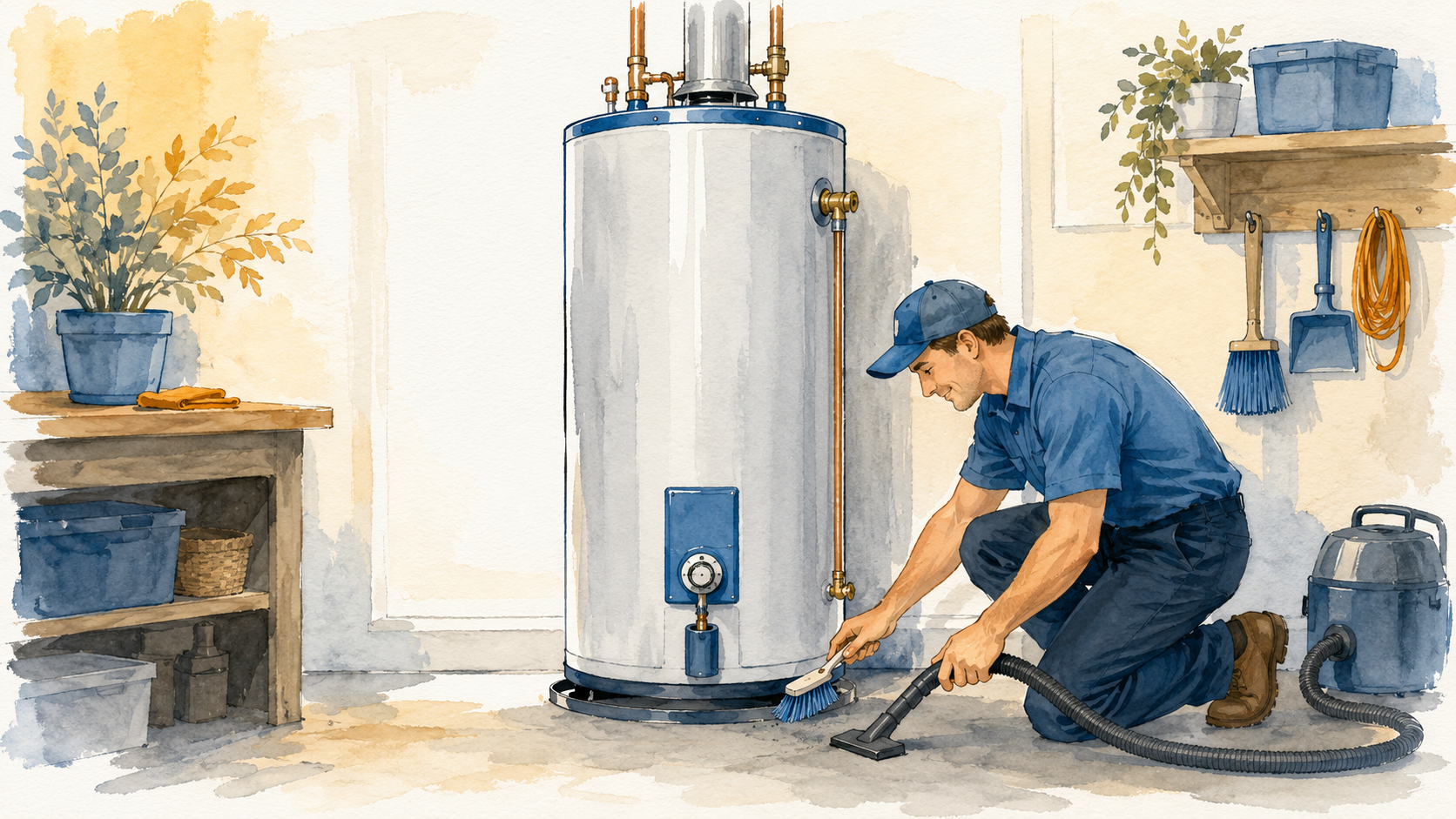
Most repeat pilot problems are maintenance problems in disguise, and the fixes are dull in the best way. Keep a clear zone around the tank, vacuum near the base a couple of times a year (more if the dryer is close or you’ve got pets), and have the intake screen and burner checked during a service visit.
Sacramento Valley water is hard, so sediment settles on the tank bottom and insulates the burner from the water it’s meant to heat. Longer burn cycles mean more heat stress on the thermocouple. An annual flush is the cheapest thing on this page, and our maintenance and flushing page covers what a visit includes. The Department of Energy has good general guidance on water heating efficiency too.
Key takeaways
- One failure is bad luck. Repeated failures are a specific fault worth diagnosing.
- Out the second you release the button points to the thermocouple.
- A lazy yellow flame points to a dirty pilot opening or a blocked intake screen.
- Failures tied to wind or doors point to drafts or venting instead of parts.
- Dryer lint is a common and very fixable cause in Sacramento garages.
- Smell gas? Leave and call the utility. Every real repair here is licensed pro work.
Frequently asked questions
Is it dangerous if my pilot light keeps going out?
The shutoff itself is protective, so the flame going out isn’t the danger. The reason behind it can be. A blocked vent or incomplete combustion can put carbon monoxide into the house, so repeated failures deserve a look instead of another relight.
How much does it cost to fix?
It depends on the cause. A cleaning sits at the low end, a thermocouple in the middle, a gas control valve at the top. Get the diagnosis first, because the spread is wide.
Why does this seem to happen more in winter?
Two reasons. Incoming water is colder, so the burner runs longer. And cold weather brings drafts. Winter is usually when a marginal part finally gives up.
Does a tankless unit have this problem?
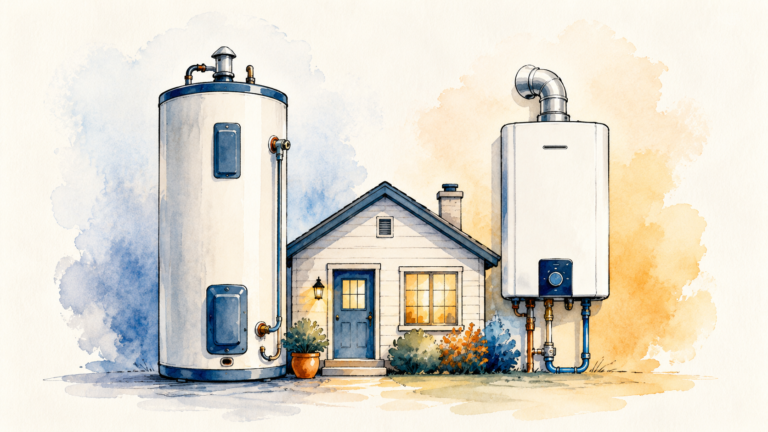
Not in the same way. Most modern tankless units use electronic ignition rather than a standing pilot, so there’s no small flame to blow out. They do have their own service needs, especially with hard water.
Getting your hot water back
Sacramento Water Heating is a water heater information and lead request service. We’re not a licensed plumbing contractor, and this article is general information rather than professional plumbing advice. Costs, code, and the right repair vary by home and unit, so have a licensed local pro assess your specific water heater.
If your pilot light keeps going out and you’d rather have someone look at it than keep guessing, we can connect you with a local pro. Call for fast help or request a free quote, and we’ll match you with someone serving Elk Grove, Roseville, Folsom, Citrus Heights, Rancho Cordova, Carmichael, and the rest of the Sacramento area.