It’s a cold February morning in Elk Grove, you step into the shower, and the water never warms past a chill. That sinking feeling is one just about every homeowner knows. A water heater that quits is a nuisance any time of year, and a real problem when the incoming water is icy from a Sacramento Valley winter.
Here’s the reassuring part. A lot of the time the reason is something small, and a few of the checks are safe to do before you ever pick up the phone. Let’s walk through why a water heater stops making hot water, what’s safe for you to look at yourself, and the point where it’s smarter to call a licensed local pro.
First, is it the whole house or just one tap?
When you lose hot water, the first clue is where. If every faucet runs cold, the trouble is almost always at the water heater itself. If it’s only one sink or shower, the fixture or its valve is the more likely culprit, and your tank may be perfectly fine.
So check a couple of taps around the house before you do anything else. Thirty seconds here can save you from chasing the wrong problem for an hour.
The most common no hot water causes
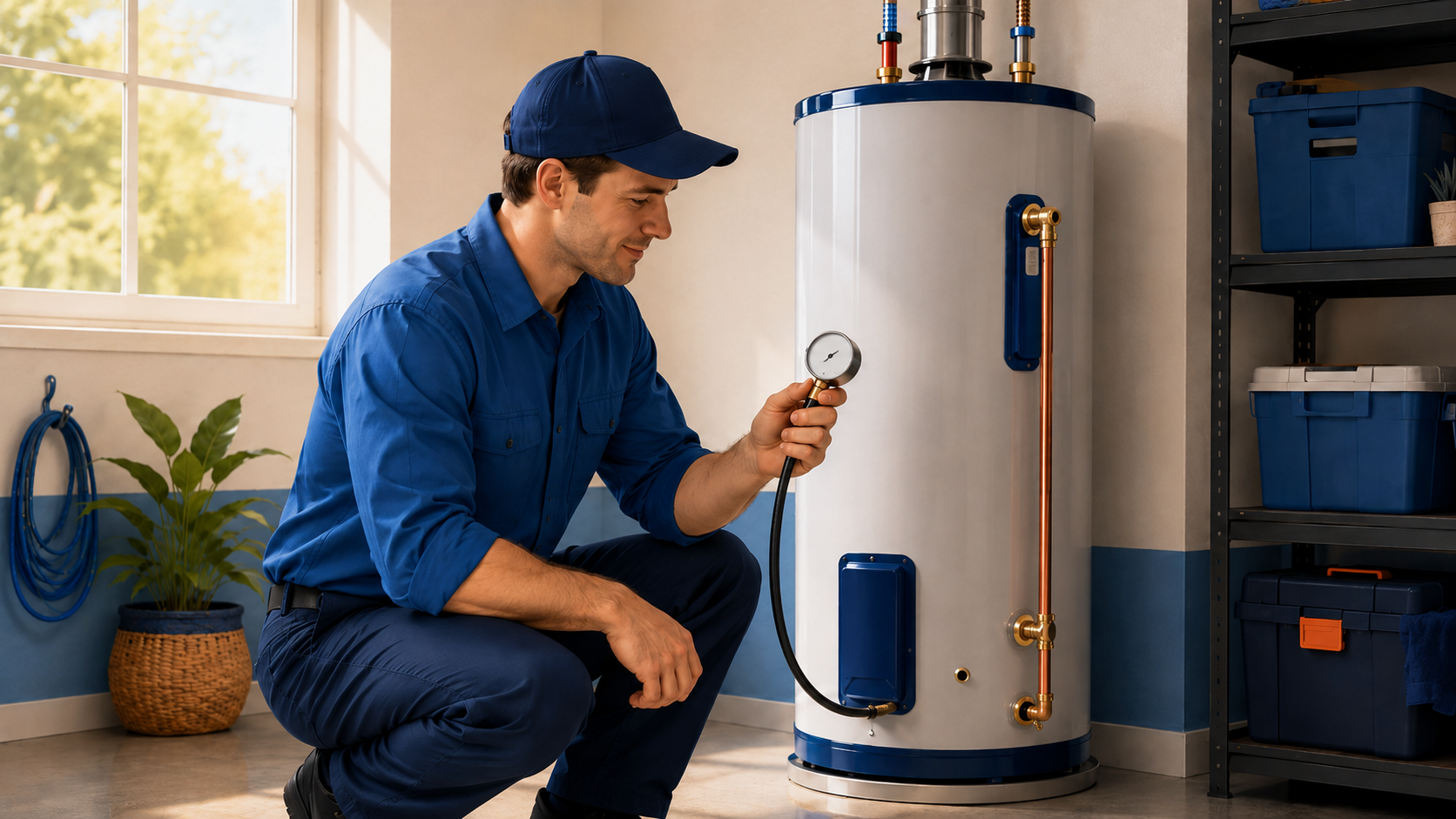
Water heaters tend to fail in a handful of predictable ways. Here are the no hot water causes we see most often in Sacramento area homes, sorted by whether you’ve got a gas or electric unit.
A tripped breaker (electric heaters)
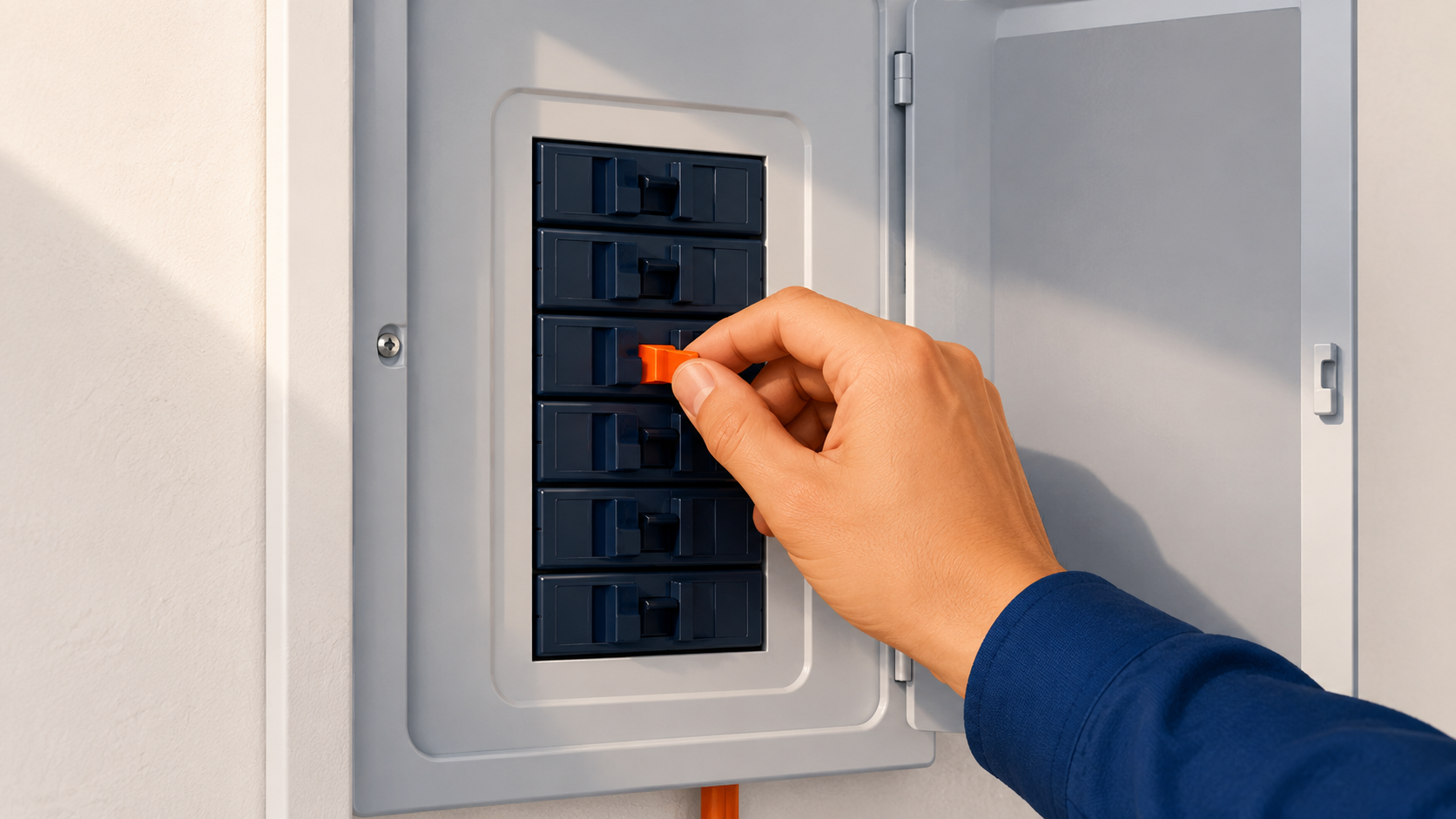
If you’ve got an electric water heater and it’s gone cold, start at your electrical panel. A tripped breaker is one of the simplest and most common reasons a tank stops heating. Flip it fully off, then back on, and give the tank an hour or two to recover.
If the breaker trips again right away, stop there. That points to an electrical fault, and it needs a pro, not a second reset.
A pilot light or burner that went out (gas heaters)
On a gas water heater, no hot water often traces back to a pilot light or burner that has gone out. A stray draft, a dirty thermocouple, or a hiccup in the gas supply can all snuff it.
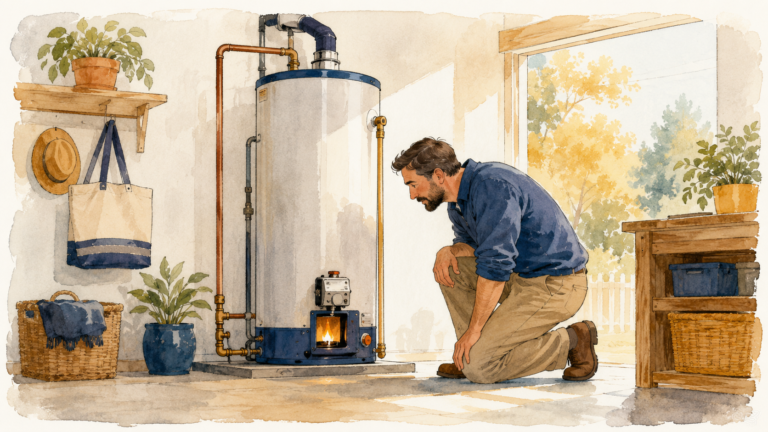
Many newer gas units have a simple igniter and a printed relighting sequence right on the tank. You can follow that sequence to set the valve to pilot and try a relight. If it won’t stay lit, leave it be and call a licensed pro. Gas work is never a do it on your own job. And if you ever smell gas, leave the house and call your gas utility or 911 before anything else.
A burned out heating element (electric heaters)
Electric tanks heat the water with one or two elements inside the tank. When an element burns out, you either lose hot water entirely or run out much faster than usual. Testing an element takes a multimeter and pulling an access panel, so most homeowners leave this one to a technician.
A worn thermostat or a tripped high limit
Both gas and electric heaters use a thermostat to hold your water at temperature. If it drifts or fails, the tank can’t keep up. Electric models also have a high limit reset button, a small red button behind the upper access panel that trips when the water gets too hot.
You can press that reset button once. If it trips again, something else is wrong, and it’s time for a service call.
Sediment buildup
Sacramento sits in a hard water region, and that matters more than most people realize. Minerals settle to the bottom of the tank over time and form a crusty layer that gets between the burner or element and the water.
That buildup makes your heater work harder, run louder, and hand you less hot water. Regular flushing keeps it in check. You can read more on our water heater maintenance page.
A leaking tank
A leak can rob you of hot water and cause damage on top of it. Water pooling under the unit, rust around the fittings, or a damp spot on the garage slab all point to trouble.
A leaking tank usually means the heater is failing and won’t be worth repairing. If you spot one, catch what water you can and call fast, because a leak only gets worse. Here’s more on what to do about a leaking water heater.
Plain old age
Most tank water heaters last about 8 to 12 years. If yours is past a decade and losing hot water more and more often, the smart money is usually on replacement rather than one more repair.
What you can safely check yourself
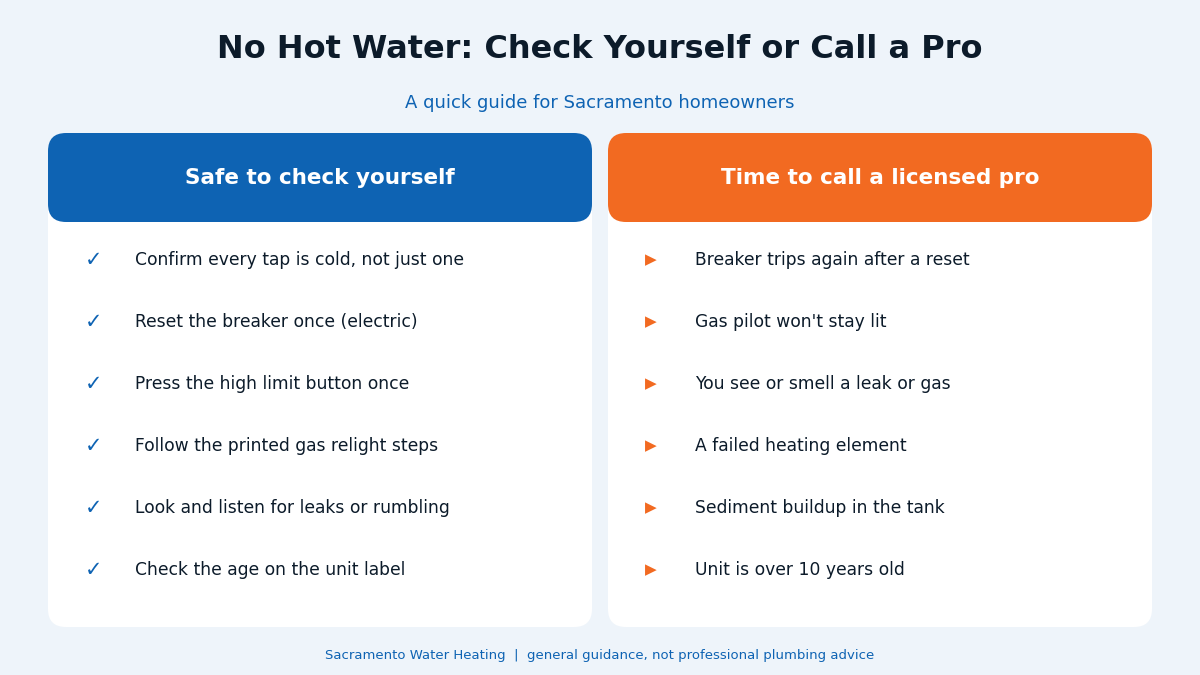
Most no hot water causes come down to power, gas, or a worn part. Before you call anyone, here’s what’s safe to look at on your own:
- Confirm it’s every tap in the house, not just one fixture.
- For an electric heater, check the breaker and flip it off then on one time.
- For an electric heater, press the high limit reset button once.
- For a gas heater, make sure the gas is on and follow the tank’s printed relight steps.
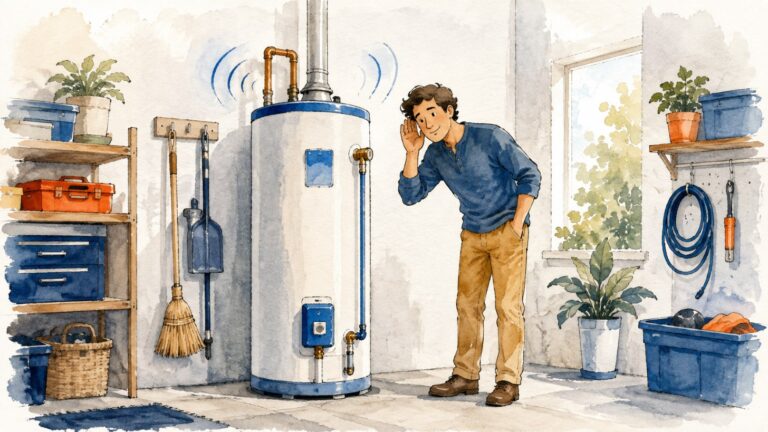
- Look and listen for leaks, drips, or a rumbling sound.
- Find the age of the unit on its label or serial number.
If none of that brings the heat back, you’ve done your part, and the rest is a job for a licensed technician. Our water heater repair team can track down the fault fast and get you sorted.
Common mistakes to avoid
A few habits turn a small problem into a big one. Watch out for these:
- Resetting a breaker or high limit over and over. One reset is troubleshooting. Repeated resets just hide a real fault that keeps building.
- Cranking the thermostat way up to force more heat. Past about 120 degrees you risk scalding and put extra stress on the tank.
- Ignoring a small drip. Today’s damp spot is next month’s flooded garage.
- Trying gas or pressure valve repairs yourself. Those always go to a pro.
The U.S. Department of Energy suggests a setting around 120 degrees for most homes, which is hot enough for daily use and easier on the tank. You can read their guidance on water heating at energy.gov.
A real Sacramento example
A homeowner in Citrus Heights called after two cold mornings in a row. Her electric tank sat in the garage, and the breaker looked fine. When the upper access panel came off, the high limit had tripped because the upper element had shorted out.
Swapping the element and resetting the limit brought her hot water back that same afternoon. It started as a classic case of no hot water and turned out to be a single worn part. That’s how a lot of these calls go, which is why a quick look by someone who knows the tank beats guessing.

When to call a pro
Call a licensed pro when the breaker trips again after a reset, when a gas pilot won’t stay lit, when you see or smell a leak or gas, or when the unit is over ten years old and struggling. Anything involving gas, venting, or the pressure relief valve should always go to a professional, no exceptions.
For homes across Roseville, Folsom, Rancho Cordova, and the rest of the metro, fast help matters most in winter, when a dead heater means genuinely cold water coming in from the street.
Key takeaways
- If only one tap runs cold, the heater is probably fine. If they all do, look at the tank.
- The most common no hot water causes are a power or breaker issue, a pilot or burner that went out, a bad heating element, a worn thermostat, sediment, or a leak.
- Safe checks: one breaker reset, one high limit reset, and a printed gas relight. Beyond that, call a pro.
- Never repeat resets, never crank the thermostat past a safe range, and never take on gas repairs yourself.
Frequently asked questions
Why do I suddenly have no hot water?
A sudden loss usually points to a tripped breaker on an electric heater or a pilot or burner that went out on a gas one. Both are worth a quick look before you assume the worst.
Can I fix no hot water myself?
You can safely reset a breaker once, press the high limit button once, and follow the tank’s printed gas relight steps. If those don’t work, the fix needs a licensed technician, especially anything to do with gas or a leak.
How long should a water heater last in Sacramento?
Most tanks last about 8 to 12 years. Our hard water can shorten that if the tank isn’t flushed, so regular maintenance really does buy you extra years.
Is no hot water an emergency?
No hot water on its own is urgent but not dangerous. A leak or the smell of gas is a different story, and those deserve a fast call to a pro or, for gas, your utility right away.
Sacramento Water Heating is a water heater information and lead request service. We are not a licensed plumbing contractor. This article is general information and not professional plumbing advice, and a licensed local pro should assess your specific water heater.
Lost your hot water and want it back fast? Call for quick local help or request a free quote, and we’ll connect you with a licensed Sacramento pro who can get the heat flowing again.